

"Is the Manaslu Circuit hard?" is the single most common question we get after "how much does it cost" — and it deserves a straight answer, not a marketing one. Here’s the honest picture: no technical climbing skills required, but a genuine physical and altitude challenge that catches underprepared trekkers off guard almost every season. Here’s exactly what makes it hard, what doesn’t, and how it stacks up against Everest Base Camp and the Annapurna Circuit.
Hand-picked itineraries
Recommended Trips
Related journeys you may want to explore after reading this article.
-1.jpg)
.jpg)
The Short Answer: Moderate to Strenuous
Most guiding outfits rate the Manaslu Circuit as moderate to strenuous — harder than a beginner trek like Poon Hill or Ghorepani, comparable to or slightly tougher than the Annapurna Circuit, and generally considered a notch below Everest Base Camp in terms of acclimatization risk (more on why below). You don’t need prior mountaineering experience or technical gear like an ice axe. What you do need is solid cardiovascular fitness, several consecutive days of walking stamina, and respect for the altitude.
What Actually Makes It Difficult
1. Daily walking hours
Expect 5 to 8 hours of walking most days, with some stretching to 9–10 hours — most notably the Larkya La crossing day itself, which typically starts before dawn. There aren’t many true rest days built into a standard 12–14 day itinerary, so the challenge is cumulative fatigue as much as any single hard day.
2. The altitude gain
You start the trek at roughly 700–900m in the subtropical Budhi Gandaki valley and climb to 5,160m at Larkya La Pass — a vertical gain of well over 4,000m in under two weeks. Above 2,500m, the air thins enough that Acute Mountain Sickness (AMS) becomes a real risk if you climb too fast. This is the single biggest factor in how “hard” the trek feels; strong legs matter less than a properly paced acclimatization schedule.
3. Larkya La Pass itself
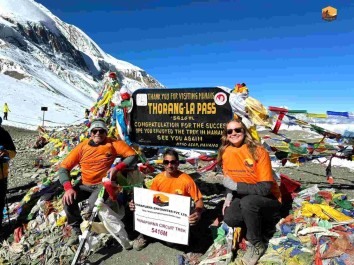
The pass is the trek’s physical and mental crux: a long, cold, pre-dawn ascent over rocky and often snow- or ice-covered terrain, followed by a steep, knee-jarring descent to Bimthang. Trekking poles are essential, and micro-crampons are worth carrying even in autumn — the descent catches out trekkers who arrive without them.
4. Remoteness
Manaslu doesn’t have the teahouse density or rescue infrastructure of Everest or the main Annapurna Circuit. Facilities are basic, options are limited once you’re past Jagat, and if something goes wrong there are fewer easy exit points. This is part of what makes the region special — it’s still wonderfully uncrowded — but it also means self-sufficiency and a good guide matter more here than on busier routes.
5. Terrain variety
The trail alternates between river-valley forest paths, exposed cliffside sections, suspension bridges, and rocky moraine near the pass. None of it is technical, but the constant up-and-down (losing elevation only to regain it) adds up over 12+ days.
What Does NOT Make It Difficult
To be clear about what you’re not signing up for:
- No ropes, crampons for glacier travel, or climbing technique required on the standard route — this is a trek, not an expedition.
- No flight into thin air on day one. Unlike Everest Base Camp, you walk into altitude gradually from a low starting point, which gives your body more time to adapt.
- Well-marked, established trail for almost the entire route, with a licensed guide required by law to help with navigation and pacing.
Manaslu vs Everest Base Camp: Which Is Harder?
This is the comparison we get asked about most, and the honest answer is: it depends on what you mean by “hard.”
- Peak altitude: EBC is technically higher (5,364m at Kala Patthar vs 5,160m at Larkya La), but Manaslu’s acclimatization curve is gentler because you start walking from a much lower elevation and gain height more gradually.
- Acclimatization risk: EBC trekkers fly straight into Lukla at ~2,800m and are sleeping above 4,000m within the first week. Manaslu’s gradual valley approach generally gives your body more time to adjust before the altitude bites.
- Infrastructure and crowds: EBC has far more teahouses, better facilities, and a well-worn trail with heavy foot traffic. Manaslu is quieter and more remote — a plus for the experience, a minus if you value backup options.
- Overall verdict: Most experienced guides consider the two roughly comparable in physical demand, with Manaslu edging slightly easier on acclimatization and slightly harder on remoteness.
Manaslu vs Annapurna Circuit
Since the road now reaches much further into the Annapurna Circuit than it used to, Manaslu has arguably become the more “complete” classic trek of the two — longer stretches of walking (rather than jeep sections), a genuinely remote feel, and a similar high pass at the end. If you’ve heard Manaslu described as “what the Annapurna Circuit used to be,” this is largely why.
Who Should — and Shouldn’t — Attempt This Trek
You’re a good fit if you:
- Can comfortably hike 5–8 hours on consecutive days
- Have done at least one multi-day trek or sustained cardio training beforehand
- Are willing to follow a guide’s pacing and acclimatization schedule rather than rushing ahead
- Understand that altitude sickness can affect fit and unfit trekkers alike, and are prepared to descend if symptoms turn serious
Reconsider, or talk to us about a gentler alternative, if you:
- Have no prior hiking or high-altitude experience and limited time to train beforehand
- Have a heart or respiratory condition that hasn’t been cleared for high-altitude travel
- Are looking for a short, easy introduction to trekking in Nepal — Poon Hill or Mardi Himal will suit you better as a first trip
How to Prepare
- Start training 8–12 weeks out. Cardio (running, cycling, swimming) 3–4 times a week, plus hill walking with a loaded daypack.
- Add leg strength work. Squats and lunges specifically help with the long descent from Larkya La to Bimthang.
- Practice back-to-back long days, not just single hikes — the cumulative fatigue is what catches people off guard, not any one day.
- Take the acclimatization days seriously. Don’t skip the built-in rest day at Samagaon, even if you’re feeling strong.
- Get insurance that covers high-altitude trekking and helicopter evacuation — non-negotiable for this route.
The Bottom Line
The Manaslu Circuit is genuinely challenging, but it’s a fitness and altitude challenge, not a technical one. Reasonably fit trekkers who train ahead of time, respect the acclimatization schedule, and trek with an experienced guide complete it successfully every season. As a private-departure operator, we build every itinerary around your pace — not a fixed group’s — with acclimatization days built in properly rather than rushed to save costs.
Thinking about taking on the Manaslu Circuit? See our private Manaslu Circuit departures — we’ll help you figure out if it’s the right trek for your fitness level and experience before you book.
FAQ
Is the Manaslu Circuit Trek suitable for beginners?
Fit beginners with some prior hiking experience and proper training can complete it, but it’s not the easiest introduction to trekking in Nepal. If this is your first multi-day hike ever, a shorter trek like Poon Hill or Mardi Himal is a gentler starting point.
Is Manaslu harder than Everest Base Camp?
They’re broadly comparable. Manaslu’s gradual approach makes acclimatization slightly easier, but its remoteness and more basic infrastructure make logistics slightly harder.
Do I need technical climbing experience for Larkya La Pass?
No. The standard route requires no ropes or climbing technique, though trekking poles and micro-crampons are strongly recommended for the pass crossing.
How many hours do you walk per day on the Manaslu Circuit?
Most days involve 5–8 hours of walking, with the Larkya La crossing day extending to 9–10 hours.
What’s the biggest risk on this trek?
Altitude sickness, by far — not fatigue or terrain. Respecting the acclimatization schedule and trekking with a guide who knows when to slow down or descend is the single most important safety factor.