
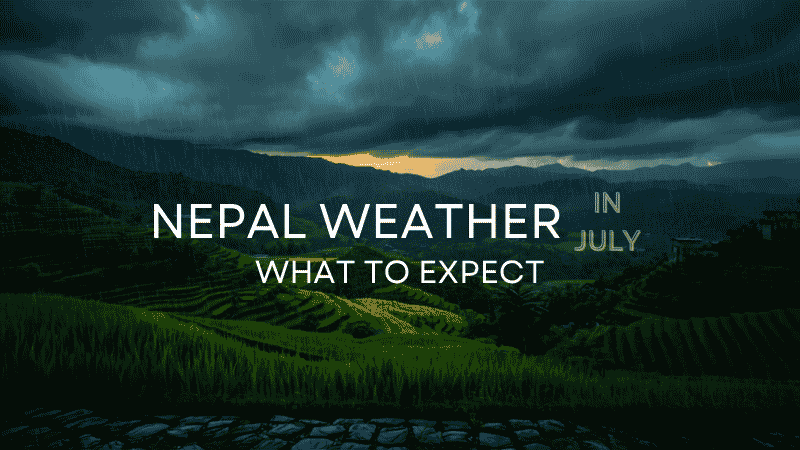
July sits at the height of Nepal's monsoon season, and the honest answer to "how hot is Nepal in July" depends enormously on where in the country you mean. A trekker standing at Everest Base Camp and a tourist in the Terai lowlands could be experiencing a 30°C temperature difference on the exact same afternoon. Here's what to actually expect, region by region.
Hand-picked itineraries
Recommended Trips
Related journeys you may want to explore after reading this article.
The Short Answer
July in Nepal is hot, humid, and wet across the low and mid-elevation regions — expect daytime temperatures around 26–30°C (79–86°F) in Kathmandu and Pokhara, hotter still in the Terai. It's the wettest month of the year nationwide, though rain tends to arrive in concentrated afternoon or evening bursts rather than lasting all day. Higher up in the mountains, temperatures drop sharply, and cloud cover regularly hides the peaks.
Kathmandu Valley (1,400m)
Kathmandu sees daytime highs of roughly 26–28°C (79–82°F) and nighttime lows around 20°C (68°F). July is consistently the wettest month of the year here, with total monthly rainfall typically in the 350–375mm range spread across around 20 rainy days. The pattern is usually manageable: mornings are often dry, with rain building through the afternoon or evening rather than falling continuously.
Pokhara (820m)
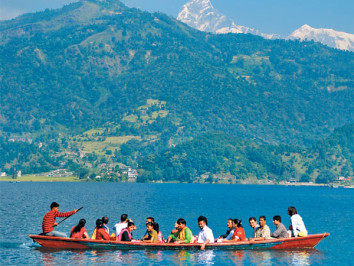
Pokhara runs both hotter and considerably wetter than Kathmandu — it's widely known as the rainiest city in Nepal. Daytime temperatures reach 28–30°C (82–86°F), and monthly rainfall can climb to 900–940mm, nearly triple what Kathmandu receives. The Annapurna range provides some shelter for certain trekking routes, but expect frequent, sometimes heavy downpours.
Terai Lowlands (Chitwan, Sauraha, Lumbini)
This is the hottest part of the country year-round, and July is no exception. Expect daytime temperatures of 30–34°C (86–93°F), with high humidity making it feel hotter still. Some lowland cities like Janakpur can push past 35–36°C (95–97°F) on the hottest days. Combined with heavy monsoon rain, it's a genuinely intense climate for outdoor activity in the middle of the day.
Mid-Hills and Lower Trekking Regions
Villages along the lower stretches of popular trekking routes — the lower Langtang valley, Ghandruk, Bandipur — generally sit in the 20–27°C (68–81°F) range during the day, cooling noticeably at night. Trails at this elevation are at their most lush and green in July, but also their most slippery, with leeches common in the forested sections.
High Himalaya (Everest, Manaslu, Annapurna High Passes)
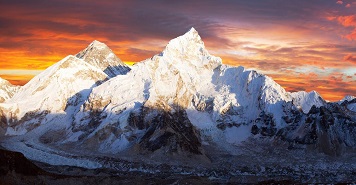
Above 4,000m, July offers no relief from winter-style cold — daytime temperatures near high camps and passes typically sit between -5°C and 10°C (23–50°F), and persistent monsoon cloud cover means mountain views are frequently obscured for days at a stretch. This is the core reason July isn't considered trekking season for the classic high-altitude routes.
Quick Reference Table
| Region | Typical July Daytime Temp | Rainfall Level |
|---|---|---|
| Kathmandu Valley | 26–28°C (79–82°F) | Heavy (wettest month) |
| Pokhara | 28–30°C (82–86°F) | Very heavy (rainiest city in Nepal) |
| Terai (Chitwan, Sauraha) | 30–34°C (86–93°F) | Heavy, very humid |
| Mid-hills / lower trek routes | 20–27°C (68–81°F) | Heavy, leeches common |
| High Himalaya (4,000m+) | -5–10°C (23–50°F) | Frequent cloud cover, less rain by volume |
Is July a Good Time to Visit Nepal?
For classic Himalayan trekking, no — this is peak monsoon, and routes like Everest Base Camp, Annapurna Circuit, and Manaslu are generally not recommended in July due to slippery trails, landslide risk, leeches, and obscured mountain views. If you're set on trekking during this window, the Upper Mustang region sits in the Himalayan rain shadow and remains one of the few high-altitude routes that stays reasonably dry and trekkable through the monsoon.
For everything else, July has real upsides: it's Nepal's low season, meaning noticeably lower hotel and transport prices, thinner crowds at cultural sites in Kathmandu, Bhaktapur, and Patan, and lush, vividly green countryside. Culture-focused itineraries, Chitwan wildlife safaris (adjusted for midday heat), and short city-based trips all work well in July — it's specifically multi-day high-altitude trekking that suffers most from the season.
Packing for Nepal in July
- Lightweight, breathable, quick-dry clothing for lowland and valley areas
- A proper rain jacket or poncho — umbrellas struggle in monsoon downpours
- Waterproof footwear or sandals for wet city streets
- Warm layers if any part of your itinerary reaches altitude, even briefly
- Insect repellent and, if trekking, leech socks for forested lower trails
As a private-departure operator, we build itineraries around what actually works for the season you're traveling in — including monsoon-friendly alternatives like Upper Mustang, or a culture-and-wildlife-focused trip if a classic trek isn't the right fit for your July dates.
Traveling to Nepal in July? Get in touch and we'll help you plan an itinerary that makes sense for the season, not just the calendar.
FAQ
How hot does it get in Nepal in July? It varies widely by region: around 26–28°C in Kathmandu, 28–30°C in Pokhara, and up to 34°C or higher in the Terai lowlands. High-altitude areas above 4,000m stay cold, often near or below freezing.
Does it rain every day in Nepal in July? Rain is frequent but usually concentrated into a 1–2 hour window, typically in the afternoon or evening, rather than falling all day. Mornings are often dry.
Can you still trek in Nepal in July? Classic high-altitude treks are not recommended due to monsoon conditions, but Upper Mustang, which sits in the Himalayan rain shadow, remains a viable trekking option through the monsoon.
Which city in Nepal gets the most rain in July? Pokhara, by a wide margin — it receives roughly three times the rainfall of Kathmandu during the monsoon.
Is July a cheap time to visit Nepal? Yes. It's low season for tourism, so hotels, transport, and many tour packages are noticeably discounted compared to the peak autumn and spring seasons.