
Search "Everest helicopter tour cost" and you'll get quotes anywhere from $1,200 to $6,000 for what looks like the same product. It isn't the same product. The gap almost always comes down to one decision — group seat or private charter — plus a few smaller factors most sites don't explain clearly. Here's what actually moves the number, from an operator who runs this flight regularly.
Hand-picked itineraries
Recommended Trips
Related journeys you may want to explore after reading this article.
.jpg)
What the Tour Actually Is
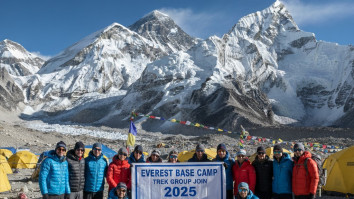
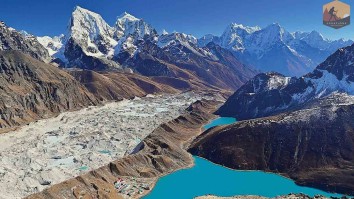
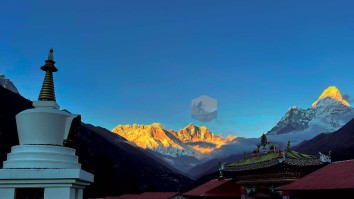
The standard Everest helicopter tour is a single-day round trip from Kathmandu, roughly 4 to 5 hours door to door. The route runs Kathmandu → Lukla (a brief refueling stop) → over Namche Bazaar and Tengboche → a landing at Everest Base Camp or Kala Patthar, wind conditions permitting → breakfast at the Everest View Hotel (3,880m, one of the highest hotels in the world) → return flight to Kathmandu.
You get close-up views of Everest, Lhotse, Nuptse, Ama Dablam, and Pumori, and you land at altitude without walking a single day of trail. It's a genuinely different product from the Everest Base Camp trek — not a shortcut version of it — and it exists for a different traveler: someone short on time, not physically prepared for two weeks of high-altitude walking, or adding a single unforgettable morning onto a broader Nepal trip.
The Real Driver: Group Seat vs. Private Charter
A helicopter to Everest Base Camp costs roughly the same to charter whether one person is on board or five. That single fact explains almost the entire price spread you'll see quoted online.
Group seat (shared flight): You book one of up to 5 seats on a helicopter, and the charter cost is split across everyone on board. This is what most people mean when they ask about "the" Everest helicopter tour cost, and it typically runs USD 1,200–1,500 per person, departing on a fixed morning schedule once enough seats are filled.
Private charter: You book the entire helicopter for your own party — no fixed departure to wait for, full control over timing, and the option to add stops or extend time on the ground. This runs from roughly USD 4,900 and up, depending on group size and exact itinerary, but split across 4–5 people it can land close to the group-seat price per person while giving you full flexibility.
The mistake we see people make is comparing a private-charter quote against a group-seat quote and assuming one operator is price-gouging. They're usually just quoting different products.
| Option | Typical price per person | Best for |
|---|---|---|
| Group seat (up to 5 pax) | $1,200 – $1,500 | Solo travelers and couples wanting the lowest cost |
| Private charter, small group (2–3 pax) | $1,600 – $2,400 | Families or friends wanting flexibility over a fixed schedule |
| Private charter, full group (4–5 pax) | $980 – $1,225 | Groups who want private control at close to group-seat pricing |
Weather Is the Cost Nobody Prices In
Everest weather closes flying windows without much notice, particularly during monsoon (June–August), when we don't recommend booking this tour at all — visibility is too unreliable to justify the cost. Even in the good seasons, an early-morning departure can slip by a few hours if cloud sits over the Khumbu, and on rare days the flight doesn't go at all.
What this means practically: don't book an Everest helicopter tour on your last full day in Nepal. If the flight is delayed a day, you need a buffer day to absorb it. We build that expectation into every quote rather than let clients discover it the morning of departure — a delayed flight because of weather is not a service failure, it's the mountain, and any operator who promises otherwise on a specific date is telling you what you want to hear rather than what's true.
Best Season for the Everest Helicopter Tour
Spring (March–May) and autumn (September to early December) give you the clearest skies, calmest winds, and highest odds of an on-schedule departure — these are the same windows that make trekking season what it is, for the same reasons. Winter (December–February) is a genuine option too: fewer other travelers, crisp cold-air visibility, occasional snow-related delays. Monsoon (June–August) is the one season we actively discourage booking this for.
What's Actually Included
Included: the helicopter flight Kathmandu–EBC/Kala Patthar–Kathmandu, airport transfers, domestic airport taxes and government permits, guaranteed window seating, an experienced high-altitude pilot, breakfast at Everest View Hotel, and our service charge and government VAT.
Not included: personal travel and medical insurance, meals or drinks beyond breakfast, tips for the pilot or ground staff, and any additional costs from weather-related delays or rescheduling.
Helicopter Tour vs. Trekking to Everest Base Camp
These aren't really competing products, but people ask us to compare them anyway, so here's the honest version: the trek takes 12–14 days, costs less per day but far more in total time, and gives you the acclimatization, the villages, the slow build toward the mountains that a lot of people come to Nepal specifically for. The helicopter tour compresses all of that into one morning and skips the physical demand entirely. If you're deciding between the two because of a knee injury, limited vacation days, or simply wanting both — trek this year, fly next year — that's a completely normal way to plan it, and we'll tell you honestly which fits your situation rather than upsell whichever costs more.
FAQ
How much does an Everest helicopter tour cost in 2026? A shared group seat typically runs USD 1,200–1,500 per person. A private charter starts around USD 4,900 for the full helicopter, which works out to roughly $980–$1,225 per person when split across a full group of 4–5.
Does the helicopter actually land at Everest Base Camp? It lands at either Everest Base Camp or nearby Kala Patthar, depending on wind conditions on the day — pilots make that call for safety, not preference, and it isn't something a traveler can request in advance.
How long does the Everest helicopter tour take? The full round trip from Kathmandu, including the breakfast stop at Everest View Hotel, takes approximately 4 to 5 hours.
Is the Everest helicopter tour safe? Yes. Pilots are experienced specifically in high-altitude Himalayan flying, and oxygen support is available on board. Weather-based delays are a safety measure, not a risk indicator.
What happens if the flight is cancelled due to weather? It's rescheduled to the next available window. This is why we recommend against booking this tour on your final day in Nepal — build in at least one buffer day.
Can I book just one seat, or do I need a full group? You can book a single seat on a group-joining flight, which departs once enough seats are filled across different bookings — this is how most solo travelers and couples do this trip.
Is a private charter worth the extra cost? It depends on your group size and priorities. For 4–5 people traveling together, a private charter can come close to group-seat pricing per person while giving you full control over timing. For 1–2 people, it's a meaningful premium for flexibility alone.
Is this the same experience as trekking to Everest Base Camp? No — it's a genuinely different way to see the mountain, not a faster version of the trek. The trek gives you two weeks of gradual acclimatization, villages, and trail time; the helicopter tour gives you the views and the landing in a single morning.
Schema Recommendations
- FAQPage schema for the 8 Q&A pairs above
- BreadcrumbList schema: Home > Travel Guide > Mt. Everest Helicopter Tour Cost 2026
Ready to Book?
Get in touch with Annapurna Encounter for current group-seat availability and private charter quotes for your dates — or if you're deciding between this and the full Everest Base Camp trek, tell us your timeline and fitness level and we'll give you a straight answer on which fits.