


Most comparisons of these two treks end in a shrug: both are wonderful, choose what speaks to you. That is not advice. The Annapurna Circuit vs Everest Base Camp decision has a genuinely correct answer for most people, and it usually turns on three unglamorous factors — how many days you have, how much flight-delay risk you can tolerate, and whether you want variety or one specific mountain. We arrange both routes every season, and we recommend one over the other in most planning calls rather than leaving clients to flip a coin.
Hand-picked itineraries
Recommended Trips
Related journeys you may want to explore after reading this article.
.jpg)
The Short Answer
Choose the Annapurna Circuit if you want landscape variety, easier logistics, no flight risk and a gentler acclimatisation profile. Choose Everest Base Camp if standing beneath Everest specifically is the point of the trip, and you accept higher costs and the Lukla flight gamble to get there.
Everything below is the reasoning.
Side by Side
| Annapurna Circuit | Everest Base Camp | |
|---|---|---|
| Highest point | Thorong La Pass, 5,416m | Kala Patthar, 5,545m (Base Camp itself 5,364m) |
| Typical duration | 12–15 days | 12–14 days |
| Access | Road from Kathmandu or Pokhara | Flight to Lukla, or long jeep via Salleri |
| Flight risk | None | Significant; delays of 1–3 days are routine |
| Ascent profile | Gradual over 8 days | Faster; altitude gained sooner |
| Landscape | Subtropical forest to alpine desert | Alpine and glacial throughout |
| Culture | Gurung, Manangi, Thakali, Hindu and Buddhist | Sherpa, Tibetan Buddhist |
| Route shape | Loop; different scenery daily | Out and back; same trail twice |
| Crowds | Busy in October, spread over a long route | Very concentrated on a single trail |
| Teahouse cost on trail | Lower | Higher; everything is flown or carried in |
| Overall trip cost | Lower | Higher, mainly due to flights |
Logistics Is the Underrated Deciding Factor
The single biggest practical difference between these treks is not altitude or scenery. It is how you get to the trailhead.
The Annapurna Circuit starts with a drive. Kathmandu to Besisahar, then a jeep up the Marsyangdi valley to Dharapani or Chame. It is a long, dusty, occasionally alarming road journey, and it is reliable. You leave on the day you planned to leave.
Everest Base Camp usually starts with a 30-minute flight to Lukla, and that flight is weather-dependent in a way that reshapes trips. Cloud closes the airstrip. Flights are cancelled and backlogged. In peak season the flight often departs from Ramechhap rather than Kathmandu, adding a four to five hour pre-dawn drive. We have had clients lose two days at either end of an Everest trek to weather holds, and we build contingency into every Everest itinerary because of it.
If you have a hard flight home and no slack in your schedule, that risk should weigh heavily. It is the reason we sometimes steer clients with tight dates toward Annapurna, or toward the Everest Base Camp trek by road, which trades flight risk for extra travel days.
Difficulty: They Are Closer Than You Think
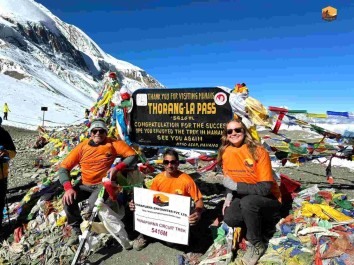
The Annapurna Circuit reaches 5,416m at Thorong La. Everest Base Camp reaches 5,364m at the camp itself and 5,545m if you climb Kala Patthar, which almost everyone does. So the peak altitudes are effectively comparable.
The difference is the shape of the ascent. The Annapurna Circuit starts around 1,800m and climbs over eight days, which is close to a textbook acclimatisation profile. Everest Base Camp starts at 2,860m in Lukla, meaning you begin higher and gain altitude faster, with acclimatisation days at Namche Bazaar (3,440m) and Dingboche (4,410m) doing a lot of work.
Against that, the Annapurna Circuit is physically longer with more cumulative walking, and it has one day — the Thorong La crossing and the 1,656m descent to Muktinath — that is harder than any single Everest day.
Neither is technical. Both are walks that demand fitness and respect for altitude. If you can do one, you can do the other.
Scenery and What You Actually See
This is where the treks genuinely diverge, and where personal preference legitimately governs.
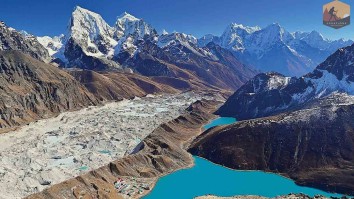
The Annapurna Circuit changes character every two days. You start in rice terraces and subtropical forest, climb through pine and blue-pine into the Manang valley, cross a high pass, and descend into the arid, Tibetan-influenced landscape of the Kali Gandaki. Walking the loop means you rarely see the same view twice. Annapurna II, Gangapurna, Tilicho Peak and Dhaulagiri all feature, and the pilgrimage temple at Muktinath and the hot springs at Tatopani add texture that has nothing to do with mountains.
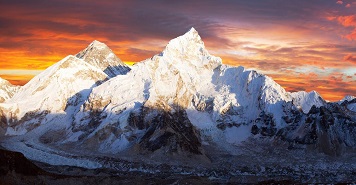
Everest Base Camp is more monotone and more concentrated. Alpine and glacial from Namche onward, with the payoff being proximity to Everest, Lhotse, Nuptse and Ama Dablam, which is arguably the most beautiful mountain on either route. You walk the same trail out and back, which some trekkers find repetitive and others find satisfying.
If you want one specific thing — to stand at the foot of the highest mountain on earth — Annapurna cannot substitute for that, no matter how good the walking is. If you want the richest and most varied two weeks of trekking in Nepal, the Circuit is the stronger trek.
Cost
Everest Base Camp costs more, and the gap is mostly flights. Return Lukla flights, higher teahouse prices because supplies arrive by helicopter or porter, and more expensive charging, Wi-Fi and hot showers on the trail all add up. Kathmandu-to-Pokhara or Kathmandu-to-Besisahar road transport is a fraction of the cost of Lukla flights.
We publish current per-person pricing by group size and service tier on each trip page rather than in blog posts, because those figures move. Compare the Annapurna Circuit 12-day trek against the 12-day Everest Base Camp trek directly for accurate, current numbers.
One thing worth knowing: the price gap narrows if you compare like with like. A premium-tier Annapurna trek with best-available lodges is not dramatically cheaper than a standard Everest trek.
Permits and Rules
Both routes require a licensed guide for foreign trekkers, mandatory since April 2023.
The Annapurna Circuit requires the Annapurna Conservation Area Permit (ACAP), currently NPR 3,000 per person for foreign nationals. Everest Base Camp requires the Sagarmatha National Park entry permit plus the Khumbu Pasang Lhamu Rural Municipality permit, which has replaced the TIMS card requirement on Everest routes.
Permit rules and fees change more often than most blogs update. We arrange all permits as part of every package and verify current fees at the time of booking.
Crowds
Both are busy in October. They are busy differently.
Everest Base Camp funnels everyone onto one trail, which means Namche is crowded, lodges book out, and you walk in a line on the popular sections. The Annapurna Circuit spreads the same number of people across a much longer loop with more lodge capacity and more route variation, so it feels less congested even when the total numbers are similar.
If crowd avoidance is a priority for either, the honest recommendation is a different trek entirely. The Manaslu Circuit offers Annapurna-style variety with a fraction of the traffic, and the Nar Phu and Kang La Pass trek branches off the Annapurna Circuit into genuinely quiet valleys.
Can You Do Both?
Not on one trip, unless you have five weeks. But trekkers who love one usually come back for the other, and there is a sensible order.
Do the Annapurna Circuit first. The gentler ascent profile and simpler logistics make it a better introduction to multi-day high-altitude trekking, and it tells you honestly how your body handles 5,000m before you commit to a more expensive and less flexible Everest trip. Clients who cross Thorong La comfortably have very good odds at Base Camp.
If you want to extend the Annapurna side instead, the Annapurna Circuit combined with Annapurna Base Camp covers both major Annapurna routes in one trip.
Frequently Asked Questions
Is the Annapurna Circuit harder than Everest Base Camp? The two treks are comparable in difficulty. The Annapurna Circuit is longer with more cumulative walking and a harder single day at Thorong La Pass, while Everest Base Camp gains altitude faster from a higher starting point. Neither requires technical climbing skill.
Which is higher, Annapurna Circuit or Everest Base Camp? The Annapurna Circuit reaches 5,416m at Thorong La Pass. Everest Base Camp sits at 5,364m, but most itineraries include Kala Patthar at 5,545m, making the Everest trek marginally higher overall.
Which trek is cheaper? The Annapurna Circuit is cheaper, primarily because it is reached by road rather than by return flights to Lukla, and because teahouse prices on the trail are lower. Comparing equivalent service tiers on our trip pages gives the accurate current difference.
Which is better for a first-time high-altitude trekker? The Annapurna Circuit is generally the better first choice. It starts around 1,800m and gains altitude over eight days, which suits acclimatisation, and it carries no flight-delay risk that could compress your itinerary.
Do I need to fly to do the Annapurna Circuit? No. The Annapurna Circuit is reached entirely by road from Kathmandu or Pokhara, which removes the flight-cancellation risk associated with Lukla on Everest treks.
Which trek has better mountain views? Everest Base Camp offers closer views of Everest, Lhotse, Nuptse and Ama Dablam. The Annapurna Circuit offers greater variety, passing from subtropical forest to high alpine desert with views of Annapurna II, Gangapurna, Tilicho Peak and Dhaulagiri. Variety favours Annapurna; a single iconic mountain favours Everest.
How many days do I need for each? Both require roughly two weeks. The Annapurna Circuit runs 12 to 15 days depending on the itinerary. Everest Base Camp runs 12 to 14 days, and we recommend adding 2 buffer days for possible Lukla flight delays.
Which is less crowded? The Annapurna Circuit feels less crowded because trekkers are spread over a long loop with more lodge capacity. Everest Base Camp concentrates everyone on a single out-and-back trail. For genuine solitude, the Manaslu Circuit is the better choice than either.
Let Us Help You Choose
We have no stake in which of these you pick. We run both, and the right answer depends on your dates, your budget and whether Everest specifically is the thing you have been imagining for years. Send us your travel window and we will tell you which one we would book in your position. Contact our Thamel office or start a custom itinerary.