


Every operator's page says "12 to 14 days," and every operator's page is telling you a half-truth. The Everest Base Camp trek days figure on a brochure is the walking itinerary — it doesn't count the day your Lukla flight gets grounded, or the two extra days we build in on purpose so that delay never touches your flight home. Book on the brochure number alone and you're planning a trip with no room in it for the one thing in the Khumbu that's genuinely unpredictable: the weather.
Hand-picked itineraries
Recommended Trips
Related journeys you may want to explore after reading this article.
.jpg)
The Standard Everest Base Camp Trek Days: 12 to 16
Strip away the marketing and there are really three trekking lengths, plus the road option. Here's what each one actually buys you.
| Itinerary | Trekking days | Acclimatization days | Best for |
|---|---|---|---|
| 10-day short trek | 8 | 1 | Fit trekkers with prior altitude experience, tight schedules |
| 12-day classic | 10 | 2 | Most first-time trekkers — the standard we recommend |
| 14–16-day extended | 12–14 | 2–3, plus slack | Anyone who wants margin without cutting Namche or Dingboche |
| By-road (no flight) | 14 | 2 | Trekkers who want to remove the Lukla flight risk entirely |
Our own 12-day Everest Base Camp Trek is the itinerary most clients book, and it's the one we point first-timers toward. The 10-day short trek compresses the acclimatization schedule, which is fine if you've already been above 4,000m somewhere else and know how your body handles it — it's a harder recommendation for someone standing at Lukla for the first time.
The number that actually matters isn't the trekking-day count on the itinerary. It's how many spare days sit between your last trekking day and your international flight home. That's the number almost nobody puts on the brochure, and it's the one that decides whether a weather delay costs you an inconvenient afternoon or a missed connection.
Why We Build In Two Buffer Days, Not One
Lukla's runway sits on a 12% grade with no instrument landing system, so every flight in or out flies on visual rules only. When cloud sits on the valley — which it does for stretches of most seasons, not just monsoon — flights simply don't go, sometimes for a full day, occasionally two.
One buffer day covers a single bad-weather day. It does not cover two bad-weather days in a row, and two-day groundings happen often enough in October, November, and again in March that we won't itinerary a trip without a second one. We've had clients who built in exactly one spare day get stuck in Lukla or rerouted through Ramechhap with an international flight already booked for the next morning. It is not a good position to be in, and it's entirely avoidable with better itinerary math at the booking stage, not a scramble once you're already on the trail.
The second buffer day costs you an extra night in Kathmandu if you don't need it. Not having it can cost you a missed flight, a same-day rebooking fee, and a genuinely stressful last 48 hours of a trip that should end well. That trade is not close.
What Actually Happens If a Flight Gets Grounded
Say your itinerary has you flying Lukla to Kathmandu on Day 12, with your international flight out on Day 13. Weather closes in and nothing flies on Day 12.
With two buffer days built in, Day 13 becomes your flight day instead, or — if the weather hasn't cleared — Day 14. You still make your international connection with room to spare. With zero buffer, you're now negotiating a helicopter seat at a premium price during exactly the period when every other stranded trekker wants the same seat, or calling the airline to move an international ticket from inside Nepal with patchy signal and no leverage.
We build every EBC quote with this scenario priced in from the start, and we tell clients plainly at the quotation stage which days are trekking and which are buffer, so nobody discovers the difference by accident on Day 11.
Shortest and Longest Options: Who Should Choose What
The 10-day short trek works if you've trekked above 4,000m before, you're confident in how your body handles altitude, and your schedule genuinely can't stretch further. It's not the itinerary we'd default a first-timer into.
The 12-day classic is the itinerary we recommend to most clients. Two full acclimatization days at Namche and Dingboche, a sensible pace between villages, and enough slack that a single bad-weather day doesn't threaten anything downstream.
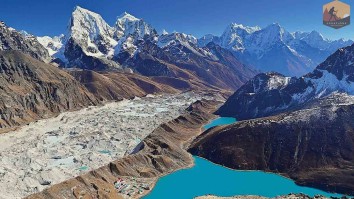
A 14–16 day extended version — including routes that add Gokyo Lakes or the Chola Pass — is worth it if you have the time and want more than a there-and-back walk to Kala Patthar.
Flying out of Ramechhap instead of Kathmandu doesn't change your trekking-day count, but it does change your morning: during the two peak seasons, most Lukla flights operate from Manthali Airport in Ramechhap, a roughly five-hour night drive from Thamel rather than a short hop across town. Worth knowing before you build a same-day arrival-to-flight schedule.
The Everest Base Camp Trek by Road removes the Lukla flight from the equation entirely by driving in via Salleri and joining the main trail on foot. It adds days compared to the classic itinerary, but if you're nervous about flying into a mountain airstrip, or you'd rather not have your whole trip's timing hostage to Khumbu cloud cover, it's a genuinely different way to solve the same problem — you're trading flight-delay risk for road-travel time.
Best Season and Permits, Briefly
Spring (March–May) and autumn (September–November) give the most reliable flying weather and the clearest mountain views, which is exactly why they're also the busiest months on the trail and in the Lukla flight queue — all the more reason to keep two buffer days rather than one during these windows. You'll need a Sagarmatha National Park permit and the Khumbu Pasang Lhamu Rural Municipality permit for any EBC route; our Nepal trekking permits guide covers current fees and how we handle the paperwork.
Frequently Asked Questions
How many days does the Everest Base Camp trek take? Most trekkers complete the walking portion in 10 to 14 days, depending on itinerary. Add two buffer days at the end for flight delays, which brings a realistic total trip length to 13 to 16 days from Kathmandu arrival to Kathmandu departure.
Is the 10-day Everest Base Camp trek safe? It's a workable option for trekkers with prior high-altitude experience and good acclimatization discipline. First-time high-altitude trekkers face a higher risk of altitude-related problems on a compressed schedule and are generally better served by the 12-day itinerary.
How many buffer days should I add for flight delays? Two. One buffer day covers a single bad-weather day; a second covers the multi-day groundings that occur several times most seasons, particularly in October, November, and March.
What happens if my Lukla flight is cancelled and I have no buffer days? Options narrow to a premium-priced helicopter seat, a multi-day wait for the next clear window, or the overland Ramechhap-Manthali route if it's operating. All three are harder and more expensive to arrange without spare days already in your plan.
Does the by-road route to Everest Base Camp take longer? Yes. Driving in via Salleri instead of flying to Lukla adds trekking days but removes flight-cancellation risk from your itinerary entirely, which some trekkers consider a worthwhile trade.
Can I extend my Everest Base Camp trek to include Gokyo Lakes? Yes — the Gokyo Lakes extension and the Gokyo Chola Pass route both add EBC as part of a longer, higher-altitude circuit rather than a there-and-back trip.
What's the minimum number of acclimatization days I should have? Two, at Namche Bazaar (3,440m) and Dingboche (4,410m), regardless of which itinerary length you choose. Cutting either is where most compressed-schedule altitude problems start.
Ready to see how the day count works for your dates? Get in touch with Annapurna Encounter and we'll walk you through an itinerary — buffer days included — before you book anything.