
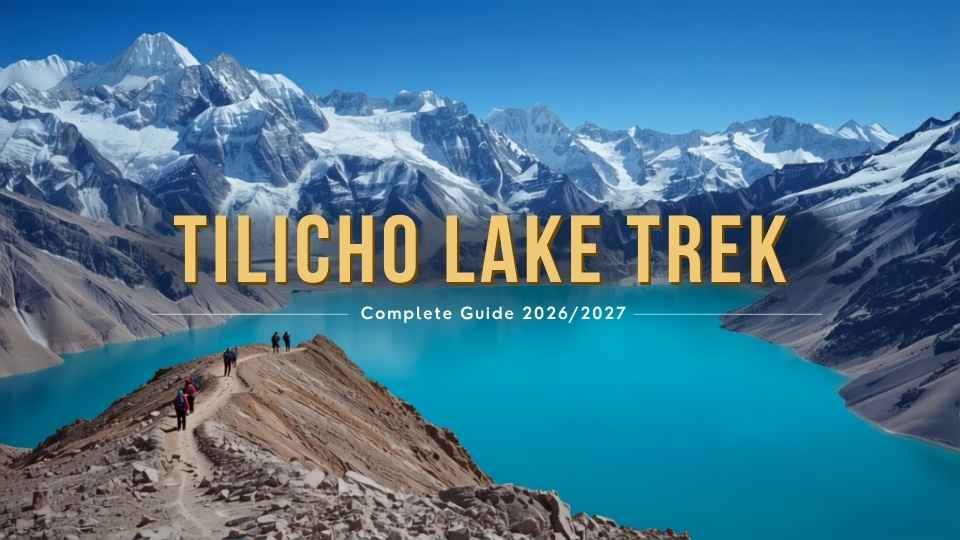
Quick answer: The Tilicho Lake Trek takes you to Tilicho Lake (4,919m), one of the highest lakes in the world, as a side trip off the classic Annapurna Circuit. Most trekkers combine it with the full circuit and Thorong La Pass crossing in a 16-day itinerary, rated strenuous, costing US$550 to US$2,600 per person depending on group size and service level. It's the route to choose if you want the Annapurna Circuit's classic highlights plus a genuinely remote, less-crowded alpine detour.
Hand-picked itineraries
Recommended Trips
Related journeys you may want to explore after reading this article.
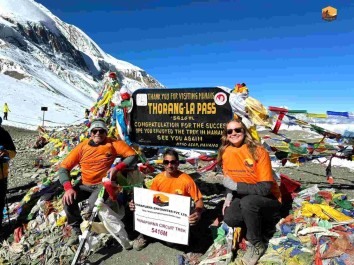
Tilicho Lake sits in a stark, glacier-fed basin surrounded by the Tilicho and Gangapurna peaks — a dramatic contrast to the greener trail below. Here's what to expect if you're planning the trek.
What Is the Tilicho Lake Trek?
Tilicho Lake is a glacial lake at 4,919m in Nepal's Annapurna region, fed by runoff from the Gangapurna and Tilicho peaks and held sacred by both Hindus and Buddhists. It sits just off the main Annapurna Circuit trail, reached via a detour from Manang through Siri Kharka and a dedicated Tilicho Base Camp.
Almost nobody treks to Tilicho Lake in isolation — it's built into a broader itinerary that also completes the Annapurna Circuit, crossing Thorong La Pass (5,416m) before descending to Muktinath and Jomsom. That combined route is what most operators, including Annapurna Encounter, sell as the Annapurna Circuit with Tilicho Lake Trek — typically run as a 16-day itinerary from Kathmandu.
Tilicho Lake Trek Cost
Here's what the 16-day Annapurna Circuit with Tilicho Lake Trek costs per person with Annapurna Encounter, based on group size:
| Group Size | Budget Package | Standard Package | Premium Package |
|---|---|---|---|
| Solo (1 person) | US$ 900 | US$ 1,850 | US$ 2,600 |
| 2 people | US$ 750 | US$ 1,700 | US$ 2,400 |
| 3–7 people | US$ 650 | US$ 1,550 | US$ 2,200 |
| 8–12 people | US$ 600 | US$ 1,450 | US$ 2,000 |
| 13–20 people | US$ 550 | US$ 1,350 | US$ 1,850 |
- Budget package: licensed guide, ACAP permit, TIMS card, local transport to and from the trailhead, twin-sharing tea-house stays — meals paid directly at lodges.
- Standard package: adds all trek meals, a porter (shared between two trekkers), 3-star hotels with breakfast in Kathmandu and Pokhara, and mixed tourist bus/jeep transfers.
- Premium package: 4–5-star hotels, private jeep transfers, a return flight between Pokhara and Kathmandu, a senior high-altitude guide, loaner trekking gear, and daily oximeter health checks.
The Tilicho detour naturally costs more than the standard Annapurna Circuit alone — it adds extra trekking days, a remote base camp night, and a longer overall itinerary — but it's still considerably more affordable than comparable extended treks in the Everest or Manaslu regions.
Tilicho Lake Trek Itinerary
Here's a condensed version of the route, showing the key stops:
| Stage | Route | Altitude |
|---|---|---|
| Days 1–4 | Drive to Syange, trek via Dharapani and Chame to Pisang | up to 3,230m |
| Day 5 | Trek to Manang village (via ancient Braga monastery) | 3,450m |
| Day 6 | Acclimatization day in Manang | 3,450m |
| Day 7 | Trek to Siri Kharka (leaving the main circuit trail) | 3,734m |
| Day 8 | Trek to Tilicho Base Camp | 4,140m |
| Day 9 | Tilicho Lake excursion, trek back to Siri Kharka | 4,919m (lake) |
| Days 10–11 | Trek to Yak Kharka, then Thorong Phedi | 4,550m |
| Day 12 | Cross Thorong La Pass (5,416m), descend to Muktinath | 5,416m |
| Day 13 | Trek to Jomsom | 2,715m |
| Days 14–15 | Drive to Pokhara, then Kathmandu | — |
The heart of the trek is Days 7 through 9: leaving the main circuit trail near Manang, climbing to a remote base camp at 4,140m, and reaching Tilicho Lake itself — a free day at the lake is typically built in for the excursion before rejoining the standard circuit route toward Thorong La Pass.
How Difficult Is the Tilicho Lake Trek?
This trek is rated strenuous — a step up from the standard Annapurna Circuit or Annapurna Base Camp treks. Three things make it more demanding:
- Higher maximum altitude: Tilicho Lake sits at 4,919m, and the route still crosses Thorong La Pass at 5,416m — meaning trekkers spend multiple days above 4,000m.
- A more remote detour: the Tilicho Base Camp side trip leaves the main circuit trail, with fewer teahouses and less frequent trekker traffic than the standard route.
- Longer daily distances: several days on this itinerary run 4–7 hours of walking at high altitude, where the air is thinner and progress is slower.
A good level of physical fitness and prior trekking experience are strongly recommended. This isn't the trek to start with if you've never done a multi-day high-altitude trek before — the standard Annapurna Circuit or Annapurna Base Camp Trek are better first steps into Himalayan trekking.
Permits Required
Every trekker needs the Annapurna Conservation Area Permit (ACAP) — NPR 3,000 (roughly US$22–25) for foreign nationals, NPR 1,000 for SAARC nationals — plus a TIMS card, issued through a registered trekking agency. Both are included in every Annapurna Encounter package. Since 2023, a licensed guide is mandatory for all foreign trekkers in the Annapurna Conservation Area, which covers the entire Tilicho Lake and Annapurna Circuit route.
Best Time for the Tilicho Lake Trek
Autumn (September–November) and spring (March–May) are the two recommended seasons, offering the clearest weather and most stable conditions for the high-altitude sections around Tilicho Base Camp and Thorong La Pass. Winter is possible for experienced, well-equipped trekkers but brings extreme cold and a higher risk of the Tilicho side route being snowed in. Monsoon season (June–August) is not recommended — the higher elevations see more precipitation and reduced visibility exactly where the views matter most.
What to Pack for the Tilicho Lake Trek
Given the altitude and remoteness of this route, packing matters more here than on shorter, lower treks:
- Clothing: a wool jacket or pullover, waterproof and windproof shell jacket and trousers, warm gloves, and wool socks
- Gear: a sleeping bag rated for sub-zero temperatures, trekking poles, a backpack with rain cover, headlamp
- Essentials: sunscreen and sunglasses (UV exposure is intense at altitude), a first-aid kit with altitude medication, a water bottle or purification system, a power bank — charging is limited or unavailable at Tilicho Base Camp
Loaner gear (down jackets, sleeping bags, trekking poles) is included in the premium package if you'd rather not buy or ship specialized equipment for a single trip.
Frequently Asked Questions
How long is the Tilicho Lake Trek? Most itineraries run 16 days from Kathmandu when combined with the full Annapurna Circuit, though standalone or shorter Tilicho-focused routes exist depending on the operator.
How much does the Tilicho Lake Trek cost? Between US$550 and US$2,600 per person, depending on group size and whether you choose a budget, standard, or premium package.
Is Tilicho Lake the highest lake in the world? It's widely described as one of the highest lakes in the world at 4,919m, though several sources cite slightly different rankings depending on how "lake" is defined. What's undisputed is that it's among the highest accessible by trekking route.
Is the Tilicho Lake Trek harder than the standard Annapurna Circuit? Yes. The Tilicho detour adds a remote, higher-altitude base camp night and extra trekking days on top of the standard circuit's Thorong La Pass crossing, making it a strenuous-rated trek overall.
Do I need prior trekking experience for Tilicho Lake? It's strongly recommended. This is not typically a first Himalayan trek — a good baseline of fitness and some previous multi-day trekking experience make the high-altitude sections significantly more manageable.
What permits do I need? The ACAP (Annapurna Conservation Area Permit) and a TIMS card, both included in every guided package, plus a licensed guide as required by Nepal's 2023 trekking regulations.
Can I do Tilicho Lake without doing the full Annapurna Circuit? Most itineraries build it in as part of the full circuit since the logistics and acclimatization schedule align naturally, but shorter, Tilicho-focused variations can be arranged — ask your operator about customizing the route.
Final Thoughts
The Tilicho Lake Trek rewards trekkers who want more than the standard Annapurna Circuit experience — a genuinely remote alpine lake, thinner crowds, and a real physical challenge, all within a well-established itinerary. For trekkers with some previous high-altitude experience, it's one of the most rewarding extensions available in the Annapurna region.
For an accurate quote based on your travel dates and group size, get in touch with Annapurna Encounter directly.