
Overview & Highlights
This 14-day Tibet pilgrimage is one of the most spiritually profound and geographically spectacular journeys on Earth. Beginning with a direct flight from Kathmandu to Lhasa, you will explore the sacred heart of Tibetan Buddhism — the Potala Palace, Jokhang Temple, and Tashilhunpo Monastery — before crossing the vast Tibetan plateau westward to the shores of Lake Mansarovar and the base of Mount Kailash.
The centrepiece of the journey is the three-day Kailash Kora: a 52 km ritual circumambulation of the holiest mountain in the world, revered simultaneously by Hindus, Buddhists, Jains, and Bon practitioners. The route then swings east, taking you to Everest Base Camp (Tibet side) for an awe-inspiring view of the world's highest peak, before returning to Lhasa via the sacred Sakya Monastery and the turquoise Yamdrok Lake.
Annapurna Encounter manages every logistical detail — permits, accommodation, meals, ground transportation, and an experienced English-speaking guide — so that your attention remains entirely on the journey.
Tour Highlights:
- ✈️ Fly Kathmandu to Lhasa — acclimatise in comfort and arrive quickly
- 🏛️ Potala Palace, Jokhang Temple and Barkhor Street — UNESCO World Heritage icons
- 🕌 Tashilhunpo Monastery, Shigatse — seat of the Panchen Lama
- 🌊 Lake Mansarovar — sacred high-altitude lake at 4,590 m
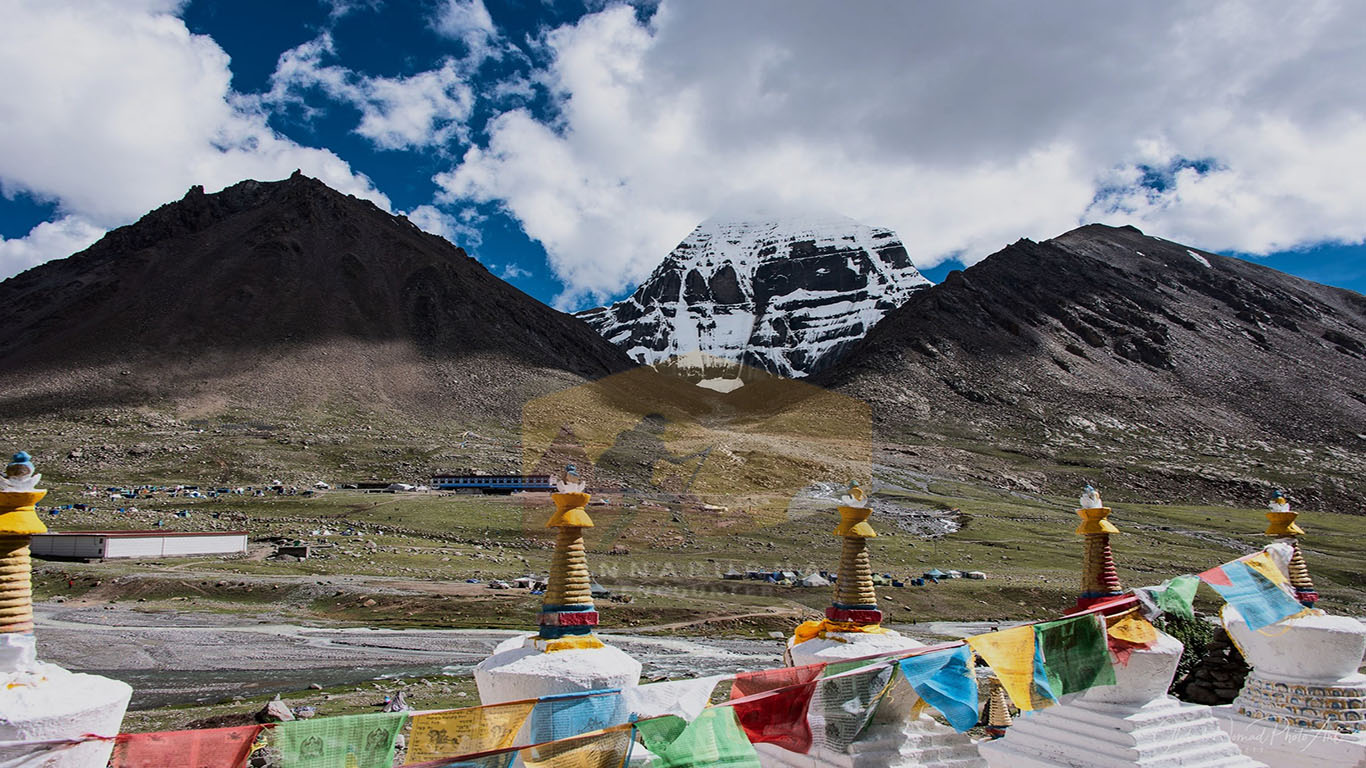
- 🏔️ Mount Kailash — complete 52 km three-day Kora crossing Drolma La at 5,630 m
- 🗿 Sakya Monastery — one of Tibet's greatest religious libraries
- 🏕️ Everest Base Camp Tibet — face-to-face with the north face of Chomolungma
- 💎 Yamdrok Lake — vivid turquoise sacred lake at 4,441 m
- 🧳 All permits, meals, transport and English guide included
- 🐃 Three yaks and two yakmen for Kailash Kora load support
Tour Pricing (USD per Person):
| Group Size | Price per Person |
|---|---|
| 10 – 14 Pax | USD 3500 |
| 14 – 20 Pax | USD 3,350 |
| 15 – 20 Pax | USD 3,135 |
| Single Supplement | + USD 1800 |
Prices are land-only (Tibet ground package). Kathmandu–Lhasa airfare is additional. Contact us for current group availability and fixed departure dates.
Day-by-Day Itinerary
| Location | Hotel / Guesthouse | Nights |
|---|---|---|
| Lhasa | Senge Snowland Hotel | 3 |
| Shigatse | Qomolangzom Hotel | 1 |
| Saga | Lhunbogangri Hotel or similar | 2 |
| Mansarovar | Chulku Guesthouse or Chiu Family House | 1 |
| Darchen | Holy Mountain Spirit Hotel or similar | 2 |
| Kora Route (Dirapuk & Zuthulpuk) | Basic Kora Guesthouses | 2 |
| Everest Base Camp | EBC Guesthouse / Rongbuk area | 1 |
| Sakya / Shigatse (return) | Nyecang How or similar | 1 |
All accommodation is on twin-sharing basis. Single supplement available at USD 800 additional.
Best Season to Travel
May – June and August – October are the optimal windows. The Kailash Kora is best attempted May through October when the high passes are snow-free. July can bring monsoon rains to the southern Tibetan plateau, making some roads challenging. Winter travel (November–March) is not advised due to extreme cold and potential road closures in far-west Tibet.
Difficulty Level
Moderate to Challenging. The Kailash Kora requires three consecutive days of trekking at altitudes between 4,560 m and 5,630 m. No technical climbing is involved, but strong physical fitness and prior altitude experience are highly recommended. The extended plateau driving can be fatiguing; the EBC sector adds further altitude exposure. Consultation with your physician regarding altitude sickness medication (Diamox) before departure is strongly advised.
Itinerary
Explore the day-by-day plan for your journey.
Altitude: 3,656 m | Flight: approx. 1.5 hrs
Your Tibet pilgrimage begins at Tribhuvan International Airport, Kathmandu. The early morning flight to Lhasa Gonggar Airport is one of the most scenic in the world — on a clear day the entire eastern Himalayan chain unfolds beneath you, with Everest, Lhotse, Makalu and Cho Oyu visible from the aircraft window.
Upon landing at Gonggar Airport (approximately 60 km from central Lhasa), your English-speaking Tibetan guide meets you at arrivals and escorts you into the city by private vehicle. The drive itself follows the Yarlung Tsangpo (Brahmaputra) River valley, offering your first views of the Tibetan plateau.
The remainder of the day is reserved entirely for rest. At 3,656 m, Lhasa is significantly higher than most travellers are accustomed to, and proper acclimatisation on Day 1 is critical to the success of the entire journey. Avoid alcohol, drink plenty of water, eat light, and sleep early. No sightseeing today.
Overnight: Senge Snowland Hotel, Lhasa
Altitude: 3,656 m | Walking: approx. 5–6 hrs
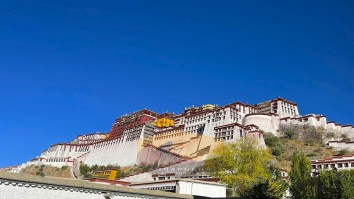
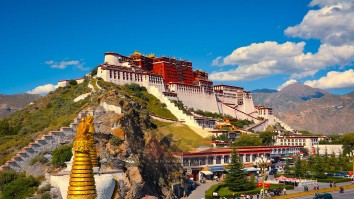
A full day immersed in the spiritual and cultural heart of Tibet. Begin the morning with a visit to the Potala Palace — the most recognisable landmark in Tibet and a UNESCO World Heritage Site. Once the winter residence of the Dalai Lamas, the 13-storey red-and-white fortress rises 117 metres above Marpo Ri Hill. Inside, hundreds of chapels, gilded stupas containing the remains of past Dalai Lamas, priceless thangkas, and ancient scriptures create an atmosphere of overwhelming sacred grandeur. Entry is timed and ticketed — your guide manages all logistics.
After lunch, make your way to the Jokhang Temple in the heart of old Lhasa. Built in the 7th century by King Songtsen Gampo, Jokhang is Tibet's most revered pilgrimage site. The centrepiece is the Jowo Rinpoche — a golden statue of the Buddha Shakyamuni at age 12, considered the most sacred object in all of Tibetan Buddhism. Watch pilgrims prostrating on the stone flagstones outside, their devotion unchanged across centuries.
Surrounding Jokhang is the Barkhor Street — a living pilgrimage circuit and marketplace that pulses with monks, pilgrims, incense smoke, prayer flags, and market stalls selling everything from yak butter to precious stones. Walk the circuit clockwise with the pilgrims and observe daily Tibetan life at its most authentic.
Overnight: Senge Snowland Hotel, Lhasa
Altitude: 3,900 m | Drive: approx. 5–6 hrs
Depart Lhasa after breakfast and drive west along the middle route — the road that follows the Yarlung Tsangpo River before climbing onto the open plateau. The landscapes shift dramatically from green river valleys to wide, wind-scoured plains flanked by ochre ridges and distant snow peaks.
Arrive in Shigatse — Tibet's second-largest city and the seat of the Panchen Lama — in the early afternoon. Visit Tashilhunpo Monastery, one of the great religious institutions of Tibet and home to over 800 monks. Founded in 1447 by the First Dalai Lama, the monastery is most famous for its enormous gilded Maitreya Buddha statue — standing 26 metres tall, it is one of the largest gilded copper statues in the world. The monastery complex also houses exquisite chapels, golden tombs of past Panchen Lamas, and a vast collection of sacred art.
Spend the evening exploring the local Shigatse market area near the monastery.
Overnight: Qomolangzom Hotel, Shigatse
Altitude: 4,640 m (Saga) | Drive: approx. 7–8 hrs
Today's drive marks your transition from the relatively developed central Tibet into the remote, sparsely populated western plateau. After leaving Shigatse the road climbs steadily, and the horizon expands into an almost incomprehensible vastness — flat plains stretching to the base of snow ranges, nomad tents visible in the distance, and herds of yak grazing on high-altitude grassland.
Pass through small towns and roadside checkpoints where your guide manages all permit verifications. The air grows noticeably thinner as altitude increases. The road to Saga crosses the Brahmaputra River over a bridge at Lhatse before continuing westward.
Arrive at Drongba or Saga in the late afternoon depending on road and weather conditions. Saga sits at 4,640 m on the banks of the Yarlung Tsangpo and serves as the last major resupply point before the journey into far-west Tibet.
Overnight: Lhunbogangri Hotel or similar, Saga
Altitude: 4,590 m | Drive: approx. 5–6 hrs
This is one of the most anticipated moments of the entire pilgrimage. Drive west from Saga through increasingly arid and dramatic terrain — the Gangdise range gradually appears on the northern horizon. Cross the Mayum La Pass (5,216 m), where prayer flags mark the traditional border between central and western Tibet. From the top of the pass on a clear day, you may catch your first distant glimpse of the cone-shaped summit of Mount Kailash (6,638 m).
Descend toward the shores of Lake Mansarovar (Mapam Yumtso) — at 4,590 m, one of the highest freshwater lakes in the world and among the most sacred bodies of water on Earth. Revered in Hinduism, Buddhism, Jainism and Bon, the lake is believed to have been created in the mind of the god Brahma and to cleanse all sin. The water is a deep, crystalline blue-green, perfectly still on calm days and reflecting the sky and surrounding peaks with mirror precision.
Spend the late afternoon walking along the shoreline. Many pilgrims perform a ritual bath or simply sit in silence beside the water. Witness the sunset over the lake if weather permits — it is extraordinary.
Overnight: Chulku Guesthouse or Chiu Family House Guesthouse, Mansarovar
Altitude: 4,560 m | Drive: approx. 1 hr
A short drive north from Mansarovar brings you to Darchen — the small but busy gateway settlement at the base of Mount Kailash, from where the sacred circumambulation (Kora/Parikrama) begins. As you approach Darchen, the south face of Kailash dominates the skyline — a perfect pyramid of snow and rock that has drawn pilgrims for millennia.
Use today's afternoon wisely. Your guide will introduce you to your yak team — three yaks and two experienced yakmen who will carry essential gear and supplies during the three-day Kora. Review your personal kit: warm layers, trekking poles, rain gear, headlamp, and any personal medication are essential. Your guide provides a full briefing on the Kora route, altitude profile, pacing strategy, and what to expect at each campsite.
Rest, hydrate well, and eat a hearty dinner. Tomorrow the sacred circuit begins.
Overnight: Holy Mountain Spirit Hotel or similar, Darchen
Altitude: 4,560 m to 5,000 m | Distance: approx. 20 km | Duration: 6–7 hrs
The first day of the Kora is a gradual, steady trek through the Lha Chu Valley — the western approach to Kailash. The trail follows the river upstream as the valley walls narrow and the sacred mountain's western and northern faces come progressively into view. This is considered one of the most visually magnificent sections of the entire circuit.
Pass the Chörten Kangs Ngyi (Two-Legged Stupa) — a sky-burial site of great religious significance. Further along, the trail passes beneath the awe-inspiring West Face of Kailash, where pilgrims offer prayers to Chenrezig (Avalokiteshvara). As the valley opens, the full North Face of Kailash — the most photographed and revered aspect of the mountain — appears directly ahead: a sheer vertical wall of black rock capped by an eternal crown of snow.
Arrive at Dirapuk Guesthouse in the late afternoon, situated directly opposite the north face. If skies are clear, spend time outside observing the mountain in the changing afternoon light — an experience that many travellers describe as transformative.
Overnight: Kora Guesthouse, Dirapuk (5,000 m)
Altitude: 5,000 m → 5,630 m → 4,790 m | Distance: approx. 20 km | Duration: 8–9 hrs
This is the most physically and spiritually demanding day of the journey — and the most sacred. Wake before dawn and begin the steep ascent toward Drolma La Pass (5,630 m), the highest point of the Kailash Kora and one of the holiest mountain passes in the world. The climb is arduous and the altitude is severe — take it slow, breathe steadily, and follow your guide's pace.
En route, pass the Shiva-tsal plateau — a sacred site where pilgrims symbolically "die" and are reborn by leaving behind an item of clothing or a lock of hair, signifying the shedding of the ego and past karma. A short distance further lies a large flat rock known as the "13th Dalai Lama's footprint rock", marked by prayer flags.
Reaching Drolma La is an overwhelming moment. The pass is adorned with thousands of prayer flags in every colour, fluttering in the thin air. Pilgrims weep, pray, and embrace. The large rock at the top — associated with the goddess Drolma (Tara) — is the spiritual centrepiece of the entire Kora.
Descend steeply to the emerald-green Gauri Kund lake (5,608 m) — also sacred — before continuing down the Lham Chu Valley to Zuthulpuk, where the great Buddhist master Milarepa is said to have performed miracles and meditated in a cave above the guesthouse.
Overnight: Kora Guesthouse, Zuthulpuk (4,790 m)
Altitude: 4,790 m to 4,560 m | Distance: approx. 12 km | Duration: 4–5 hrs
The final day of the Kora is a gentle, relatively easy walk that completes the circuit. The trail descends along the eastern and southern approaches of Kailash, passing through open valley terrain with wide views. The mood in the group is typically one of quiet elation — the completion of the Kailash Kora is considered one of the most significant spiritual achievements available to a human being, said to wipe away the karma of an entire lifetime.
Arrive back in Darchen by midday. Rest, celebrate, and reflect. Your yakmen and yaks are released here. A warm lunch at the hotel marks the formal end of the pilgrimage circuit.
Afternoon is free for rest or personal exploration of Darchen.
Overnight: Holy Mountain Spirit Hotel or similar, Darchen
Altitude: 4,640 m | Drive: approx. 5–6 hrs
Begin the long return journey eastward across the Tibetan plateau, retracing the high-altitude road through the remote western landscape. The drive from Darchen back to Saga is long but meditative — the vast open plateau, the crystalline light, and the absence of crowds make it easy to reflect on the experience of the Kora.
Stop at viewpoints along the way as time permits. Arrive Saga in the late afternoon. Overnight: Lhunbogangri Hotel or similar, Saga.
Altitude: 5,200 m | Drive: approx. 7–8 hrs
Drive southeast from Saga through the Tingri plains — the vast high-altitude flatlands from which Everest and the entire Mahalangur Himal range are visible on the southern horizon. The sight of Everest growing larger with every kilometre is deeply dramatic.
Turn south at the junction toward Rongbuk Valley. Pass through the Rongbuk Monastery (5,100 m) — the highest monastery in the world and one of the last inhabited Buddhist monasteries on the approach to Everest. The monastery was founded in 1902 by Nyingma lama Ngawang Tenzin Norbu and offers extraordinary views of Everest's north face directly up the valley.
Continue to Everest Base Camp, Tibet (5,200 m). Unlike the Nepal side, the Tibet side of EBC offers an unobstructed, close-range view of Everest's legendary North Face and North Ridge — the route attempted by Mallory and Irvine in 1924. No other single vantage point on Earth brings you this close to the summit of the world's highest mountain without climbing.
Overnight: EBC Guesthouse or Rongbuk area accommodation
Altitude: 3,900 m | Drive: approx. 7–8 hrs
Depart EBC after an early breakfast and drive north toward Lhatse, then east toward Sakya. Arrive at Sakya Monastery by midday — one of the most historically significant religious sites in all of Tibet.
Founded in 1073, Sakya is the seat of the Sakya school of Tibetan Buddhism and was for a period in the 13th–14th centuries the political capital of all Tibet under Mongol patronage. The main monastery is a massive fortress-like structure housing one of the greatest collections of ancient Tibetan manuscripts, sacred artworks, and ritual objects in existence. The interior walls are lined floor-to-ceiling with scriptures — a library of extraordinary depth and antiquity.
Continue driving east to Shigatse, arriving in the evening.
Overnight: Nyecang How or similar, Shigatse
Altitude: 3,656 m | Drive: approx. 5–6 hrs
The return to Lhasa follows the scenic southern route over the Kamba La Pass (4,794 m), from which the first views of Yamdrok Lake (Yamdrok Tso) appear below — a breathtaking panorama of turquoise water stretching across the valley floor, flanked by snow-streaked ridges and deep blue sky.
Yamdrok Lake (4,441 m) is one of Tibet's three sacred lakes and one of the most visually stunning bodies of water in Asia. Its serpentine shape spans over 70 km in length and its colour shifts from deep teal to vivid turquoise depending on the light and season. Stop at the viewpoint for photographs and a moment of contemplation.
Continue over the Karo La Pass (5,045 m) — where a glacier descends almost to road level — and descend into the Lhasa valley. Arrive Lhasa in the late afternoon. Tonight, a final group dinner celebrates the completion of the journey.
Overnight: Senge Snowland Hotel, Lhasa
Travel: approx. 1.5 hrs flight
Transfer to Lhasa Gonggar Airport for your return flight to Kathmandu. The journey that began with one flight now comes full circle — but the traveller who departs is not quite the same as the one who arrived. The Kailash Kora, Mansarovar, Everest and the sacred monasteries of Tibet leave an impression that is permanent.
Upon arrival in Kathmandu, the tour concludes. We recommend not booking onward international connections on the same day, as Tibet flight schedules can occasionally shift.
Tour ends on arrival in Kathmandu.
Similar Trips
Enjoy the popular trekking and tour packages in Nepal Himalayas. 2026.
Mount Kailash and Lhasa Tour
Lhasa To Kathmandu Bike Tour
Tibet Overland Tour