
Trip Region: Manaslu
Trip Duration: 14 Days
Max Altitude: 5,160 m (Larkya La Pass)
Trek Grade: Moderate to Strenuous
Best for: Adventurous trekkers comfortable with rain, looking for solitude and lush scenery
Permits Required: Manaslu Restricted Area Permit, Manaslu Conservation Area Permit (MCAP), Annapurna Conservation Area Permit (ACAP), Local Rural Municipality Permit
TIMS Card: Not Required
Hand-picked itineraries
Recommended Trips
Related journeys you may want to explore after reading this article.
.jpg)
-1.jpg)
.jpg)
Overview
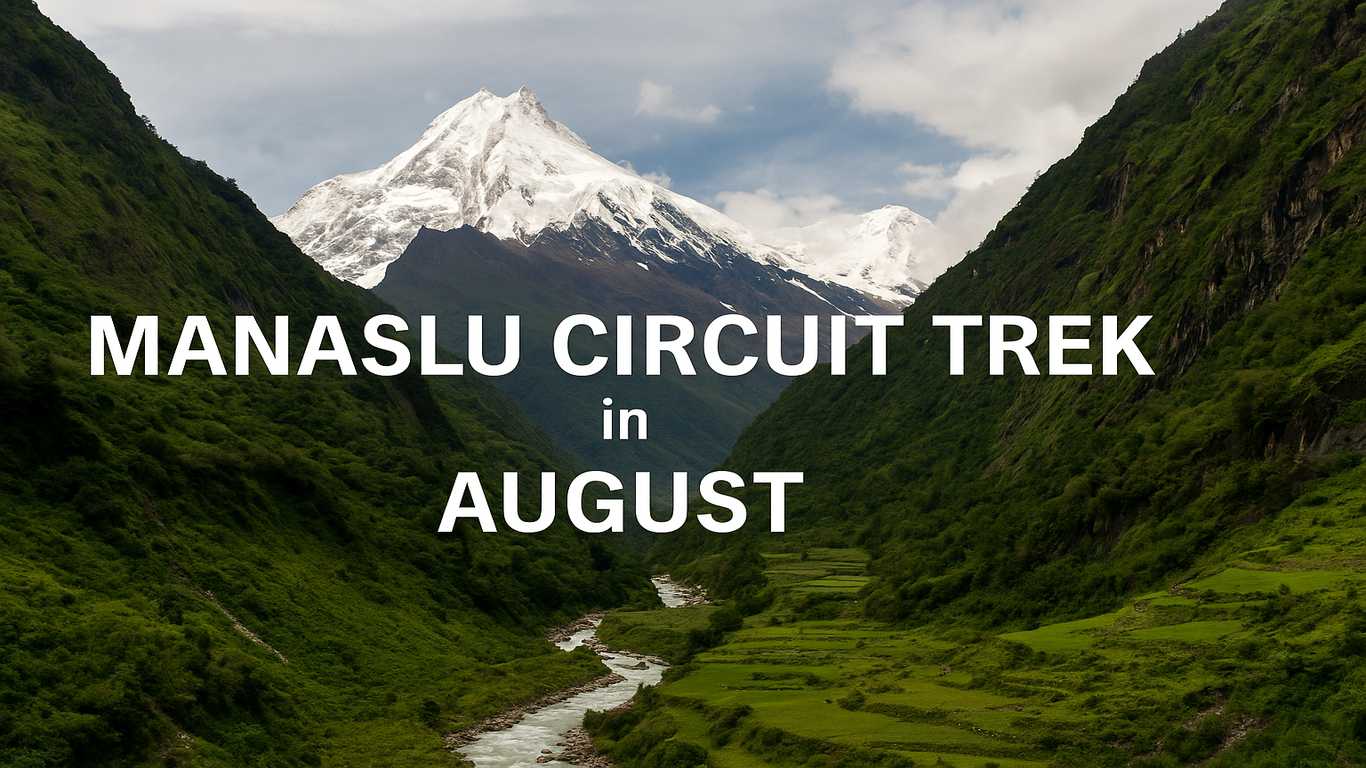
The Manaslu Circuit Trek in August is a lesser-traveled route during Nepal’s monsoon season, but it offers rich rewards for those seeking solitude, blooming landscapes, and authentic Himalayan culture. While August is not traditionally peak trekking season, it is ideal for those who enjoy vibrant greenery, peaceful trails, and immersive cultural encounters.
Weather in August
August falls in the middle of the monsoon season (June to September). Rain is common, especially below 3,000 meters, but mornings are often clear. The landscapes are at their most vibrant—lush forests, roaring waterfalls, and misty valleys.
Trail Conditions:
Wet and muddy at lower elevations
Higher altitude trails are generally drier and more stable
Afternoon showers common—early starts recommended
Mountain views are best in the morning
Why Trek in August?
Pros:
Less crowded trails and lodges
Enhanced natural beauty: lush greenery, wildflowers, and powerful waterfalls
Increased chance of cultural interaction in remote villages
Quiet monasteries and more serene mountain ambiance
Challenges:
Afternoon rain and occasional landslides
Leeches below 2,000 meters
Limited visibility due to cloud cover in the afternoon
Some lodges may operate with reduced staff or services
Required Permits
To legally trek the Manaslu Circuit, you’ll need the following permits:
Manaslu Restricted Area Permit (RAP) – Compulsory and only available through a registered trekking agency.
Manaslu Conservation Area Project (MCAP) – Required for entry into the conservation zone.
Annapurna Conservation Area Project (ACAP) – Needed after crossing Larkya La Pass into the Annapurna region.
Local Rural Municipality Entry Permit – Issued via your trekking agency.
Note: Solo trekking is prohibited in the restricted zone. A licensed guide and registered agency are mandatory.
14-Day Standard Itinerary
Day 1: Drive from Kathmandu to Machha Khola
Day 2: Trek to Jagat
Day 3: Trek to Deng
Day 4: Trek to Namrung
Day 5: Trek to Lho
Day 6: Trek to Samagaun
Day 7: Acclimatization in Samagaun (Hike to Manaslu Base Camp or Pungyen Gompa)
Day 8: Trek to Samdo
Day 9: Rest day in Samdo
Day 10: Trek to Dharmashala
Day 11: Cross Larkya La Pass and trek to Bimtang
Day 12: Trek to Tilije
Day 13: Trek to Dharapani and drive to Besisahar
Day 14: Drive back to Kathmandu
Optional: Extend your journey to include Tsum Valley with 5–6 additional days.
What to Pack for August
Clothing:
Waterproof hiking boots
Rain jacket and pants
Moisture-wicking clothing
Insulating layers for higher altitudes
Gloves, warm hat, and fleece jacket
Gear:
Backpack with rain cover
Sleeping bag (-10°C recommended)
Trekking poles
Headlamp and spare batteries
Water purification tablets
Monsoon-Specific Items:
Leech protection (salt, leech socks)
Quick-dry towels and socks
Dry bags for electronics
Lightweight trekking umbrella (optional)
Safety and Travel Tips
Start your trek early each day to avoid afternoon rain
Consult your guide about recent landslide zones
Acclimatize gradually above 3,000 meters
Be flexible with your schedule to accommodate weather delays
Carry extra snacks, power banks, and cash (no ATMs en route)
Ensure your travel insurance covers helicopter evacuation
Cultural Highlights
Mount Manaslu (8,163 m) – Nepal’s 8th highest mountain
Larkya La Pass (5,160 m) – Panoramic views and a high-altitude achievement
Villages like Lho, Samagaun, and Samdo – With ancient monasteries and Tibetan influence
Monasteries and Chortens – Including Ribung Gompa and Pungyen Monastery
Seasonal Agriculture – Experience Himalayan life during planting and harvesting season
Conclusion
Trekking the Manaslu Circuit in August is a unique opportunity to experience the Himalayas in a quieter, greener, and more culturally immersive way. While the weather presents challenges, the rewards include serene trails, rich biodiversity, and deep cultural encounters. With proper preparation, guidance, and a flexible mindset, August can be one of the most enriching times to explore this majestic region.
Ready to trek Manaslu in August?
Contact Annapurna Encounter Pvt. Ltd. today to book your custom trekking package with professional guides, permit assistance, and complete logistics management.
???? +977-9860311119, 9841537595
???? info@annapurnaencounter.com, annapurnaregion@gmail.com
???? www.annapurnaencounter.com