
Quick Answer: Accommodation on the Annapurna Circuit Trek consists mainly of family-run teahouses — simple mountain lodges found in every village along the trail. A standard teahouse room costs USD 3–8 per night at lower elevations and USD 10–17 near Thorong La, and includes twin wooden beds, mattresses, pillows, and blankets. Hot showers, Wi-Fi, and device charging are available at most stops for a small extra fee. You do not need a tent at any point on the circuit.
Hand-picked itineraries
Recommended Trips
Related journeys you may want to explore after reading this article.

-1.jpg)
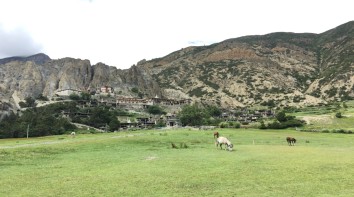
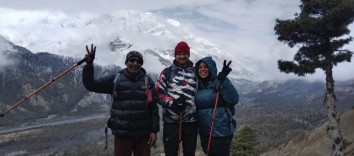
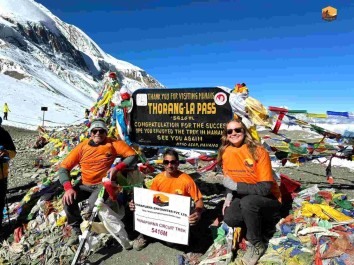
One of the biggest questions trekkers ask before booking the 12 Days Annapurna Circuit Trek is a simple one: where will I sleep every night? The good news is that the Annapurna Circuit is Nepal's most developed teahouse trekking route. From the subtropical villages of the Marsyangdi Valley to the windswept high camps below Thorong La Pass (5,416 m), you will find a warm bed, a hot meal, and genuine Himalayan hospitality at the end of every trekking day.
At Annapurna Encounter, we have been arranging accommodation on this route since 2014, and our guides personally know the lodge owners in every village. This guide explains exactly what to expect from Annapurna Circuit trek accommodation — the teahouse system, facilities at each altitude, realistic costs, and insider booking tips — so you can start your trek with clear expectations.
What Is a Teahouse on the Annapurna Circuit?
A teahouse (locally called a bhatti) is a family-run mountain lodge that serves as guesthouse, restaurant, and social hub in one. Teahouses grew out of the traditional rest stops where traders and porters once paused for tea, and today they form the backbone of trekking in Nepal. Unlike remote routes such as Dhaulagiri or Kanchenjunga that require full camping support, the Annapurna Circuit has teahouses in virtually every settlement, which means you carry no tent, no stove, and no food — just your personal gear.
A standard teahouse room contains two single wooden beds with foam mattresses, pillows, and thick blankets. Walls are usually plywood or stone, toilets are shared (Western-style in bigger villages, squat-style higher up), and the heart of every teahouse is the communal dining hall with its central stove — the warmest room in the building and the place where trekkers from around the world gather each evening.
How Does Accommodation Change with Altitude?
The single most important thing to understand about accommodation on the Annapurna Circuit is that comfort levels change with elevation. The higher you climb, the simpler the facilities become — because every mattress, gas cylinder, and solar panel above the road head arrives by mule, porter, or yak.
Lower Circuit: Besisahar to Chame (760 m – 2,710 m)
The lower villages offer the most comfortable stays of the trek. In Besisahar, Jagat, Dharapani, and Chame you will find well-built guesthouses with larger rooms, some attached bathrooms, reliable electricity, Wi-Fi, and gas-heated hot showers. Chame, the district headquarters of Manang, is a particularly good overnight stop with sturdier lodges, Western toilets, well-stocked shops, and even a small natural hot spring nearby. On our 12-day itinerary, this comfortable belt is where your trek begins after the drive from Kathmandu.
Middle Circuit: Pisang to Manang (3,200 m – 3,540 m)
Upper Pisang offers cozy, simple rooms with spectacular views of Annapurna II, while Manang is the accommodation highlight of the entire circuit. As the main acclimatization hub, Manang has 15–20 lodges ranging from budget teahouses to well-appointed guesthouses with attached bathrooms, bakeries serving fresh apple pie and espresso, movie halls, and reliable solar power. Because most itineraries (including ours) include an acclimatization day here, choosing a good lodge in Manang makes a real difference to your rest and recovery.
High Circuit: Yak Kharka to High Camp (4,050 m – 4,850 m)
Above Manang, expect the most basic accommodation of the trek. Yak Kharka, Thorong Phedi (4,450 m), and High Camp (4,850 m) have small plywood rooms, shared toilets, and no hot showers. Rooms here cost more (USD 10–17) despite being simpler, because supplies must be carried up by mule. Dining halls remain warm and lively, and lodge kitchens still produce impressively hearty meals. These nights are short anyway — most trekkers are asleep by 8 PM for the pre-dawn pass crossing.
After the Pass: Muktinath, Jomsom, and the Kali Gandaki
Once you cross Thorong La and descend to Muktinath (3,800 m), comfort returns quickly. Muktinath and Jomsom sit on the road network, so lodges here offer attached bathrooms, gas showers, good Wi-Fi, and famous Thakali dining. Jomsom, where our trek concludes before the scenic drive or flight to Pokhara, feels almost luxurious after the high camps.
How Much Does Annapurna Circuit Accommodation Cost?
Teahouse accommodation on the Annapurna Circuit is remarkably affordable. As of the 2026/2027 seasons, expect roughly the following:
| Item | Lower Villages | High Altitude (above 4,000 m) |
|---|---|---|
| Twin room per night | USD 3–8 | USD 10–17 |
| Dal bhat / main meal | USD 4–8 | USD 7–12 |
| Hot shower | USD 2–3 | USD 4–6 (where available) |
| Wi-Fi | USD 1–3 | USD 3–5 (unreliable) |
| Device charging | Often free | USD 2–4 per device |
Two useful local customs to know: room rates are often discounted (occasionally nearly free) if you eat dinner and breakfast at the same lodge, since food is the owner's main income; and prices for everything rise with altitude because of transport costs. Budget an extra USD 50–100 across the trek for showers, Wi-Fi, charging, and hot drinks.
On an Annapurna Encounter package, all trekking accommodation is included in your trip cost — our guides book rooms in trusted, clean lodges as you go, so you never negotiate prices or search for beds after a long trekking day.
Do You Need to Book Teahouses in Advance?
For most of the year, no — teahouses operate on a walk-in basis, and your guide secures rooms on arrival or by calling ahead. However, during peak seasons (October–November and March–April), popular stops like Manang, Thorong Phedi, and High Camp fill up fast, and independent trekkers sometimes end up sleeping in dining halls. This is one of the strongest practical reasons to trek with a local operator: our guides phone lodge owners a day ahead throughout peak season, guaranteeing you a proper room even at the busiest high camps.
What Should You Pack for Teahouse Nights?
Blankets are provided everywhere, but nights above 3,500 m regularly drop below freezing and rooms are unheated. Bring a four-season sleeping bag (rated to at least −10°C), a headlamp for nighttime bathroom trips, earplugs for thin plywood walls, toilet paper, a power bank (20,000 mAh eliminates most charging fees), quick-dry towel, and wet wipes for the shower-free high camps. Annapurna Encounter provides complimentary sleeping bag and down jacket rental for our trekkers who need them.
Is There Luxury Accommodation on the Annapurna Circuit?
The circuit is not a luxury lodge route like some parts of the Everest region, but comfort-focused trekkers have options. Several lodges in Chame, Manang, Muktinath, and Jomsom offer deluxe rooms with attached bathrooms, electric blankets, and better bedding for a premium of USD 20–50 per night. If you prefer upgraded rooms wherever available, plus hotel nights in Kathmandu and Pokhara, ask us about the luxury version of our Annapurna Circuit packages — we customize every private departure.
Frequently Asked Questions
What kind of accommodation is available on the Annapurna Circuit Trek? Family-run teahouses and lodges are available in every village along the route. Rooms are twin-share with beds, mattresses, pillows, and blankets. No camping is required at any point.
How much does a teahouse cost on the Annapurna Circuit? Rooms cost USD 3–8 per night at lower elevations and USD 10–17 near Thorong La. Meals cost USD 4–12 per plate depending on altitude.
Are there hot showers on the Annapurna Circuit? Yes, most teahouses below 4,000 m offer solar or gas-heated showers for USD 2–6. Above Yak Kharka, hot showers are rare, so most trekkers use wet wipes for the two highest nights.
Is there Wi-Fi and phone signal on the trek? Most villages up to Manang have paid Wi-Fi (USD 1–5). NTC and Ncell data SIMs work in many settlements but weaken above 4,000 m. Muktinath and Jomsom have good connectivity again.
Do teahouses provide blankets, or do I need a sleeping bag? Blankets are provided, but a −10°C sleeping bag is strongly recommended for the unheated rooms above 3,500 m.
Can I get a private room with an attached bathroom? Yes, in larger villages such as Chame, Manang, Muktinath, and Jomsom. At Thorong Phedi and High Camp, only basic shared facilities exist.
Rest Well, Trek Strong
Accommodation is one of the quiet pleasures of the Annapurna Circuit — evenings by the dining-hall stove, dal bhat refills, and mountain sunrises from your bedroom window are as memorable as Thorong La itself. When you trek with Annapurna Encounter, every night's lodge is pre-arranged, personally vetted, and included in your package, so all you carry up the trail is anticipation.
Ready to experience Himalayan hospitality for yourself? Explore our 12 Days Annapurna Circuit Trek itinerary, or contact our Kathmandu team for a private departure tailored to your dates, pace, and comfort level.
Annapurna Encounter Pvt. Ltd. is a licensed, locally owned trekking operator based in Thamel, Kathmandu (Tourism License No. 2019/072), organizing private-departure treks across the Annapurna region since 2014.