
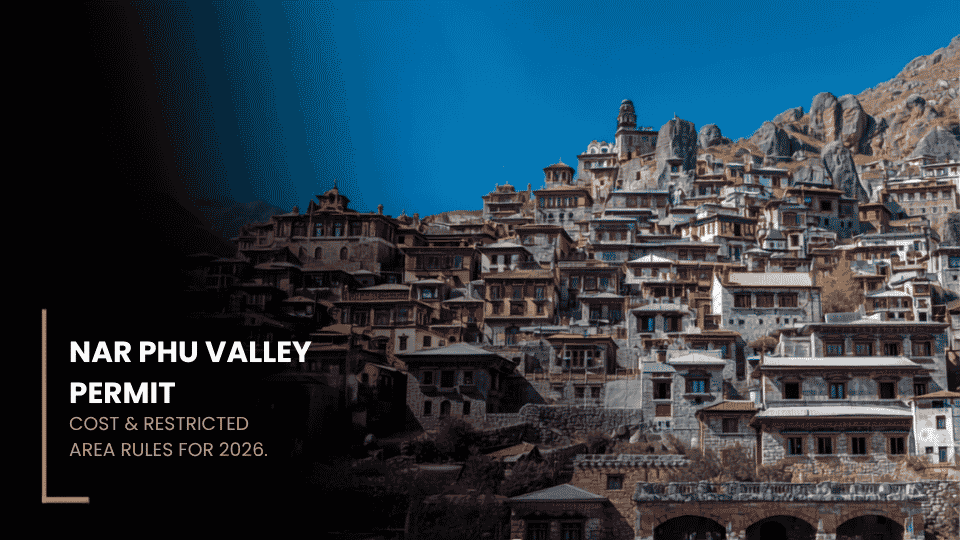
Nar Phu sits close enough to the Tibet border that Nepal still treats it as a restricted area, which means the permit process is different from almost anywhere else in the Annapurna region — and until recently, genuinely harder to plan around. The rule requiring a minimum of two foreign trekkers per permit was removed in March 2026. If you've read an older guide that still says you need a trekking partner to get in, that guide is out of date.
Hand-picked itineraries
Recommended Trips
Related journeys you may want to explore after reading this article.

Why Nar Phu Needs a Different Permit
Most Annapurna treks need only the Annapurna Conservation Area Permit (ACAP). Nar Phu needs that plus a separate Restricted Area Permit (RAP), because the valley falls under Nepal's border-security permit system alongside places like Upper Mustang, Manaslu, and Upper Dolpo. The RAP can't be applied for independently — it's issued only through a Nepal-registered trekking agency, and you must trek with a licensed guide for the entire restricted section.
This isn't paperwork for its own sake. The permit system funds trail maintenance and limits uncontrolled tourism in a valley that was only opened to foreigners in 2002 and still has a genuinely small resident population.
Nar Phu Restricted Area Permit Cost
| Season | Fee | Extra days |
|---|---|---|
| September–November (peak) | USD 100 for first 7 days | USD 15/day beyond 7 |
| December–August (off-peak) | USD 75 for first 7 days | USD 15/day beyond 7 |
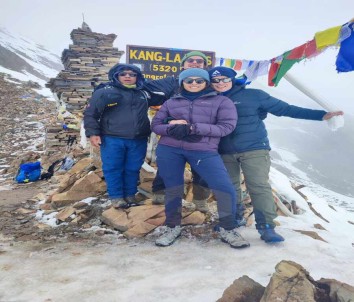
On top of the RAP, you'll need the ACAP (USD 30, flat rate, no seasonal variation) since the trek starts and ends inside the Annapurna Conservation Area. A TIMS card isn't mandatory for Nar Phu alone, but becomes required the moment you extend onto the main Annapurna Circuit — which most itineraries do, since the standard route crosses Kang La Pass (5,320m) and rejoins the circuit at Ngawal.
For a standard 12-day trip, that puts government permit costs at roughly USD 130 in peak season or USD 105 off-peak, before any agency service fee. Anyone quoting a total package cost without breaking out permits separately isn't giving you the full picture — ask what portion is government fee versus what the agency charges for guiding, food, and transport.
What Changed in March 2026
Until March 2026, restricted-area permits across all 15 of Nepal's restricted zones required a minimum of two foreign trekkers before the Department of Immigration would issue one — a real obstacle for solo travelers, who often had to pair up with strangers or pay a punitive single-supplement just to get the paperwork approved. That rule was formally removed, and solo trekkers can now obtain the Nar Phu RAP on their own.
What hasn't changed: you still need a registered agency to submit the application and a licensed guide with you throughout the restricted section. Independent, guideless trekking remains prohibited in Nar Phu, as it does across every restricted area in Nepal.
Where the Restricted Section Starts and Ends
The restricted zone begins at Koto, on the main Annapurna Circuit trail, and continues through Meta, Phu, Nar, and over Kang La Pass before rejoining the circuit near Ngawal. Checkpoints along this stretch verify your permit, so carry your passport and permit documents at all times — agencies handle the paperwork, but you still need to produce the physical permit when asked.
| Checkpoint | Approx. elevation |
|---|---|
| Koto (entry) | 2,600m |
| Meta | 3,560m |
| Phu Gaon | 4,080m |
| Nar Village | 4,110m |
| Kang La Pass | 5,320m |
Best Season and Difficulty
Spring (March–May) and autumn (September–November) give the clearest weather and the most stable trail conditions, particularly for the Kang La Pass crossing, which is exposed and weather-dependent. Nar Phu sits partly in a rain shadow, which makes monsoon trekking possible in theory, but road access to Koto can still be disrupted by landslides during the wettest months.
We grade this trek moderate to strenuous. The trail itself isn't technical, but the altitude gain, the remoteness, and the Kang La Pass crossing demand solid fitness and at least some prior high-altitude experience. This isn't a first Himalayan trek.
Frequently Asked Questions
How much does the Nar Phu Valley trek permit cost? The Restricted Area Permit costs USD 100 for the first 7 days in September–November, or USD 75 for the first 7 days from December–August, plus USD 15 for each additional day. You'll also need the USD 30 Annapurna Conservation Area Permit.
Can I trek Nar Phu Valley solo now? Yes. Since the Department of Immigration removed the two-trekker minimum in March 2026, solo travelers can obtain the Restricted Area Permit on their own, provided they book through a registered agency and trek with a licensed guide.
Do I need a guide for Nar Phu Valley? Yes, and this hasn't changed. A licensed guide is mandatory throughout the restricted section, regardless of your trekking experience or group size.
Is a TIMS card required for the Nar Phu Valley trek? Not for Nar Phu alone, but it becomes required if your itinerary extends onto the main Annapurna Circuit, which most 12-day routes do after crossing Kang La Pass.
Can I get the Nar Phu permit myself without an agency? No. Restricted Area Permits for Nar Phu must be submitted by a Nepal-registered trekking agency through the Department of Immigration in Kathmandu. There's no walk-in or online application for individual trekkers.
What's the difference between the Nar Phu permit and the Annapurna Conservation Area Permit? The ACAP is a flat USD 30 fee covering entry to the Annapurna Conservation Area generally. The Restricted Area Permit is a separate, seasonal fee specific to the Nar Phu restricted zone, and you need both.
How difficult is Kang La Pass? At 5,320m, it's the trek's highest and most demanding point — a long, exposed climb typically started before dawn to cross while the weather is most stable. Good acclimatization beforehand matters more here than raw fitness.
We handle every part of the Nar Phu permit process — RAP, ACAP, and TIMS where it applies — as part of our Nar Phu Valley Trek package. If you'd rather take more time in the valley or add on the wider Nar Phu & Kang-La Pass Trek, we can put together an itinerary either way.