

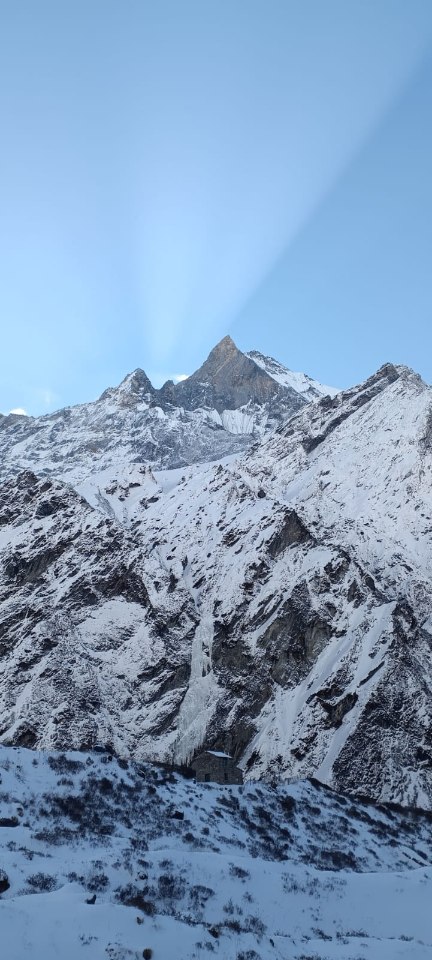
The Annapurna Range is one of the most breathtaking and formidable mountain chains in the Himalayas. Located in north-central Nepal, this range is part of the larger Annapurna Massif, a collection of towering peaks that attract trekkers, climbers, and adventure enthusiasts from around the world. While Annapurna I is the most famous and highest peak in the range, there are several other notable mountains that contribute to the grandeur of this Himalayan wonder.
Hand-picked itineraries
Recommended Trips
Related journeys you may want to explore after reading this article.
.jpg)
.jpg)
Let’s explore all the major peaks that make up the Annapurna Range.
1. Annapurna I (8,091m / 26,545ft) – The Highest and the Deadliest
- First ascent: 1950 by a French expedition led by Maurice Herzog.
- Notable facts:
- It was the first 8,000-meter peak ever climbed, even before Everest.
- It has a high fatality rate due to unpredictable avalanches and technical climbing challenges.
- Despite its beauty, it remains one of the most dangerous mountains to climb.
2. Annapurna II (7,937m / 26,040ft) – The Second-Highest in the Massif
- First ascent: 1960 by a British/Indian/Nepali team.
- Notable facts:
- Located to the east of Annapurna I, it is technically distinct from its higher counterpart.
- Less climbed compared to Annapurna I, but still presents major challenges.
- Offers stunning views along the Annapurna Circuit Trek.
3. Annapurna III (7,555m / 24,786ft) – The Underrated Giant
- First ascent: 1961 by an Indian team.
- Notable facts:
- It is considered one of the most difficult unclimbed routes in the Himalayas.
- Offers a spectacular view from Manang Valley and along the trek to Tilicho Lake.
- Its Southeast Ridge remains one of the greatest unclimbed climbing challenges.
4. Annapurna IV (7,525m / 24,688ft) – The Overlooked Peak
- First ascent: 1955 by a German expedition.
- Notable facts:
- Located close to Annapurna II, often mistaken as part of it.
- Less technical than some of its neighboring peaks, but still a challenging climb.
5. Gangapurna (7,455m / 24,459ft) – The Ice-Covered Beauty
- First ascent: 1965 by a German expedition.
- Notable facts:
- One of the most beautiful glaciated peaks in the Annapurna Range.
- Visible from Manang and along the Annapurna Circuit.
- Named after Ganga, the Hindu goddess of the sacred Ganges River.
6. Machhapuchhre (6,993m / 22,943ft) – The Sacred "Fishtail" Mountain
- First ascent: Unclimbed (sacred and restricted for climbing).
- Notable facts:
- One of Nepal’s most iconic peaks, known for its distinct fishtail-shaped summit.
- Considered sacred by locals and banned from climbing.
- Visible from Pokhara and the Annapurna Base Camp trek.
7. Hiunchuli (6,441m / 21,132ft) – The Guardian of Annapurna Sanctuary
- First ascent: 1971 by an American team.
- Notable facts:
- Lies next to Annapurna South and forms the eastern boundary of the Annapurna Sanctuary.
- Less climbed due to steep rock walls and technical difficulties.
8. Annapurna South (7,219m / 23,684ft) – The Gateway Peak
- First ascent: 1964 by a Japanese expedition.
- Notable facts:
- One of the most photographed peaks due to its visibility from Ghorepani and Poon Hill.
- Prominent on the route to Annapurna Base Camp.
9. Tilicho Peak (7,134m / 23,406ft) – Overlooking the Highest Lake
- First ascent: 1978 by a French expedition.
- Notable facts:
- Located near Tilicho Lake, one of the highest lakes in the world (4,919m).
- Offers one of the most remote and challenging climbs in the region.
10. Pisang Peak (6,091m / 19,984ft) – The Popular Climbing Peak
- First ascent: 1955 by a German expedition.
- Notable facts:
- Considered a trekking peak, making it a good introduction for new climbers.
- Offers stunning views of the Annapurna Massif and Manang Valley.
11. Chulu East & Chulu West (6,429m & 6,419m) – The Twin Climbing Peaks
- First ascent: 1955 by a German expedition.
- Notable facts:
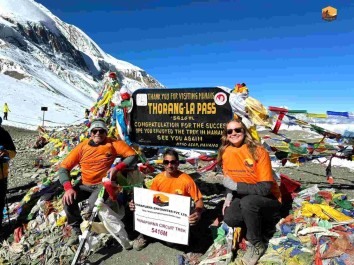
- Located close to Thorong La Pass, these peaks are popular for climbers.
- Provide stunning views of Annapurna II, III, and Gangapurna.
Conclusion
The Annapurna Range is a marvel of nature, home to some of the most dramatic and challenging mountains on the planet. From the towering Annapurna I, the sacred Machhapuchhre, to the trekking-friendly Pisang Peak, each of these mountains offers something unique for adventure seekers.
Whether you are a trekker on the Annapurna Circuit, a climber seeking new heights, or simply an admirer of the Himalayas, the Annapurna Massif remains an awe-inspiring destination waiting to be explored.