

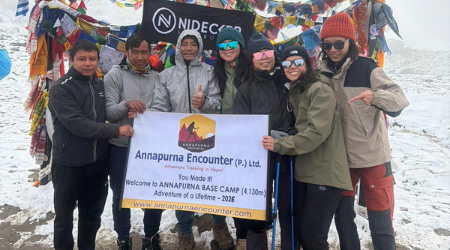
You've booked your flight to Nepal, dreamed about that first sunrise over the Annapurna massif, and now you're staring at an empty duffel bag wondering what on earth goes inside it. We get it — packing for the Annapurna Base Camp trek is the part that quietly stresses people out the most.
Hand-picked itineraries
Recommended Trips
Related journeys you may want to explore after reading this article.
.jpg)
.jpg)
Here's the good news: the ABC trek is one of the most beginner-friendly classic routes in the Himalayas, and you don't need to haul a mountain of gear to do it well. You just need the right gear. Over the years, our guides at Annapurna Encounter have walked this trail hundreds of times, and we've watched trekkers overpack, underpack, and occasionally forget the one thing they actually needed (looking at you, headlamp).
This guide breaks down exactly what to bring, layer by layer, so you arrive at base camp warm, comfortable, and ready to enjoy the view instead of wishing you'd packed gloves.
Why Packing Smart Matters on the Annapurna Base Camp Trek
The thing that catches most people off guard about the Annapurna Base Camp trek is how dramatically the climate changes. You start down in the warm, humid lowlands around Nayapul (roughly 1,070 m), wander through terraced rice fields and rhododendron forests, and finish standing at Annapurna Base Camp itself — a frosty 4,130 m, ringed by giants like Annapurna I and the iconic fishtail peak, Machhapuchhre.
In a single trek you'll pass through subtropical, temperate, and alpine zones. Mornings can be balmy and afternoons can turn freezing within hours, especially as you gain altitude. That's why layering is the golden rule here — not one heavy jacket, but several adaptable pieces you can add or shed as the mountain dictates.
Pack for that range and you'll be comfortable the whole way. Ignore it, and you'll either be sweating buckets in the forest or shivering at base camp. Let's make sure it's the former.
Annapurna Base Camp Trek Packing List at a Glance
Before we go deep, here's the quick overview of what you'll need:
Clothing: a full layering system from base layers to a waterproof shell
Footwear: broken-in trekking boots, camp shoes, quality socks
Sleeping: a sleeping bag rated to around -10°C
Backpack: a 40–50L pack (or a porter duffel) plus a daypack
Documents: ACAP permit, TIMS card, passport, insurance
Essentials: headlamp, power bank, first aid kit, water purification
Extras: sunscreen, trekking poles, snacks, and a few personal comforts
Now let's unpack each category properly.
Clothing: Master the Layering System
If you remember one thing from this entire post, make it this: layers beat bulk every single time.
Base Layers
Your base layer sits against your skin and manages moisture. Pack two to three moisture-wicking tops (merino wool or synthetic — never cotton, which stays wet and chills you) and a pair of thermal leggings for cold evenings at higher teahouses. Merino has the bonus of resisting odour, which your trekking companions will quietly appreciate after day four.
Mid Layers for Insulation
This is your warmth layer. A fleece jacket or two lightweight pullovers work beautifully for the daytime climb. For the cold push toward base camp, add a down or synthetic insulated jacket — this is non-negotiable for the upper sections, where temperatures can dip well below freezing even in peak season.
Outer Shell
The Himalayas don't always read the weather forecast. A waterproof, breathable jacket (Gore-Tex or similar) and a pair of rain pants protect you from sudden rain, wind, and snow flurries. Even if the sky looks perfect when you set out, pack the shell.
Trekking Bottoms
Bring two pairs of quick-dry trekking trousers — convertible zip-off pants are a smart pick since you'll want shorts in the lower forests. Avoid jeans entirely. They're heavy, slow to dry, and miserable in the mountains.
Footwear for the Annapurna Base Camp Trek
Your feet carry you the whole way, so this is no place to cut corners.
Trekking Boots
Choose sturdy, ankle-supporting, waterproof trekking boots — and break them in before you fly to Nepal. Blisters on day one from brand-new boots can sour an otherwise magical trek. A well-worn-in pair is worth more than the most expensive boots fresh out of the box.
Socks and Camp Shoes
Pack four to five pairs of cushioned hiking socks (wool or synthetic), plus a couple of thermal pairs for cold nights. A pair of lightweight camp shoes, sandals, or flip-flops is pure relief at the teahouse after a long day — your feet will thank you the moment those boots come off.
Headwear, Handwear and Accessories
The small stuff makes a big difference at altitude:
A warm beanie for cold mornings and a sun hat or cap for the exposed midday sun
A buff or neck gaiter — versatile for dust, wind, and warmth
Insulated gloves plus a thin liner pair for layering
UV-protection sunglasses (category 3 or 4) — the glare off snow near base camp is no joke
Backpack and Daypack: What to Carry
How you pack depends on how you trek. Many of our guests hire a porter, in which case you'll need a sturdy duffel bag (around 60–70L) for your main gear, plus a comfortable 20–30L daypack for what you carry yourself — water, snacks, camera, rain jacket, and valuables.
If you're carrying everything solo, a 40–50L backpack with a supportive hip belt is ideal. Either way, line your bag with a dry sack or bin liner and bring a rain cover. Himalayan moisture has a way of finding everything.
Sleeping Bag and Personal Comfort
Teahouses along the Annapurna Base Camp trek provide beds and blankets, but those blankets won't be enough up high. Bring a sleeping bag rated to roughly -10°C for a warm, solid night's sleep. A silk or cotton liner adds extra warmth and keeps your bag clean.
A few small comforts go a long way too: earplugs for thin teahouse walls, a lightweight travel pillow, and an inflatable seat cushion if you like your creature comforts.
Permits and Documents You Can't Forget
No paperwork, no trail. For the Annapurna Base Camp trek you'll need:
ACAP (Annapurna Conservation Area Permit)
TIMS card (Trekkers' Information Management System)
Your passport plus a few passport-sized photos
A copy of your travel insurance that covers high-altitude trekking and emergency helicopter evacuation
If you book with Annapurna Encounter, we sort the permits for you — but always carry the physical copies, as they're checked at several points along the route.
First Aid Kit and Medications
Pharmacies are scarce once you're on the trail, so build a small personal kit:
Blister plasters and basic bandages
Painkillers, antiseptic cream, and rehydration salts
Anti-diarrhoea and motion-sickness tablets
Personal prescription medicines (bring more than you think you'll need)
Diamox for altitude sickness, if your doctor recommends it
Your guide carries a comprehensive first aid kit and a pulse oximeter, but having your own essentials means you're never caught short.
Electronics and Gadgets
Keep it light, but don't skip the must-haves:
A headlamp with spare batteries — essential for early starts and dim teahouses
A power bank (charging costs extra and gets pricier the higher you go)
Your phone, camera, and the right charging adapters
A universal travel adapter for Nepal's plug types
Pro tip: cold drains batteries fast, so tuck your phone and power bank into your sleeping bag overnight to keep them alive.
Toiletries and Personal Hygiene
Hot showers thin out as you climb, so pack practical:
Biodegradable soap, a quick-dry travel towel, and hand sanitiser
Toothbrush, toothpaste, and wet wipes for trail freshen-ups
High-SPF sunscreen and lip balm with UV protection (the alpine sun is fierce)
A roll of toilet paper — and please pack out what you can to keep the trail clean
Water, Snacks and Hydration
Staying hydrated is your best defence against altitude sickness on the Annapurna Base Camp trek. Carry a reusable bottle or hydration bladder of at least 2 litres, plus a water purification method — purification tablets, a filter bottle, or a SteriPEN. It's cheaper and greener than buying bottled water all the way up.
Toss in some energy bars, trail mix, nuts, and a few of your favourite chocolates. Familiar snacks are a surprising morale boost on tough days.
Seasonal Packing Tips for the Annapurna Base Camp Trek
The base list stays the same, but smart trekkers tweak it for the season.
Spring and Autumn (Peak Seasons)
March–May and September–November bring the clearest skies and the famous rhododendron blooms. Stick to the standard layering setup — these are the most forgiving months, though nights up high are still cold.
Winter (December–February)
Expect snow and seriously cold nights. Add extra insulation, heavier gloves, hand warmers, and gaiters, and consider microspikes for icy patches. A warmer sleeping bag is well worth the extra weight.
Monsoon (June–August)
Rain, mud, and leeches define this stretch. Pack extra waterproofing, anti-leech salt or spray, quick-dry everything, and gaiters. Cloud cover can hide the peaks, so flexibility and patience are part of the kit.
Pro Packing Tips from Our Guides
A few hard-won lessons from the trail:
Weigh your bag before you leave. If you can lift it comfortably, you've packed well. If you grunt, repack.
Pack in dry sacks by category — clothing, electronics, toiletries — so you're not rummaging in the cold.
Carry a little cash in small notes; ATMs vanish after Pokhara and teahouses don't take cards.
Bring a printed copy of your itinerary and emergency contacts, just in case your phone dies.
What NOT to Pack
Save weight by leaving these behind: jeans and cotton clothing, bulky hardcover books (use an e-reader), excessive toiletries, heavy camera tripods you won't use, and "just in case" outfits. On the Annapurna Base Camp trek, every gram you carry is a gram you feel — pack light and pack with purpose.
Final Thoughts
Packing for the Annapurna Base Camp trek isn't about cramming in everything you own — it's about choosing versatile, weather-ready gear that keeps you warm, dry, and free to soak up the Himalayas. Get your layers right, break in your boots, sort your permits, and the trail will reward you with one of the most unforgettable amphitheatres of peaks on the planet.
Ready to lace up? Annapurna Encounter handles your permits, teahouses, guides, and porters so you can focus on the views — not the logistics. Reach out and let's get you to base camp.
Frequently Asked Questions (FAQ)
How heavy should my backpack be for the Annapurna Base Camp trek? Aim to keep your main pack around 8–12 kg if carrying it yourself. If you hire a porter, they typically carry up to 15–20 kg (often shared between two trekkers), leaving you with just a light daypack of 4–6 kg.
Do I need a down jacket for the Annapurna Base Camp trek? Yes. Even in peak season, temperatures at Annapurna Base Camp (4,130 m) drop below freezing, especially at night and early morning. A down or synthetic insulated jacket is essential for the upper sections.
Can I rent trekking gear in Nepal? Absolutely. Thamel in Kathmandu and lakeside Pokhara are full of shops renting and selling sleeping bags, down jackets, trekking poles, and more at reasonable rates — handy if you don't want to buy everything at home.
What kind of shoes are best for the Annapurna Base Camp trek? Waterproof, ankle-supporting trekking boots that are well broken in before your trip. Pair them with a set of light camp shoes or sandals for relaxing at the teahouses each evening.
Is a sleeping bag necessary if teahouses provide blankets? Yes. Teahouse blankets aren't warm enough at higher altitudes. A sleeping bag rated to around -10°C ensures a comfortable, restful night so you're fresh for the next day's trek.
Do I need water purification on the trail? Strongly recommended. Carry purification tablets, a filter, or a SteriPEN. It's cheaper than buying bottled water along the way, keeps you reliably hydrated, and cuts down on plastic waste in the Annapurna region.