
Search "Tsum Valley trek cost" and you'll find quotes anywhere from $700 to $2,500 for what looks like the same 10 to 14-day itinerary. Neither number is necessarily a lie. The confusion is that almost nobody separates what the Nepal government actually charges — three permits, priced the same for every operator — from what an agency charges for the guide, porter, lodging and transport wrapped around them. We file these permits for clients every season. Here's what's fixed, what varies, and what a properly run package should actually cost you in 2026.
Hand-picked itineraries
Recommended Trips
Related journeys you may want to explore after reading this article.
.jpg)
Where the Tsum Valley Trek Actually Goes
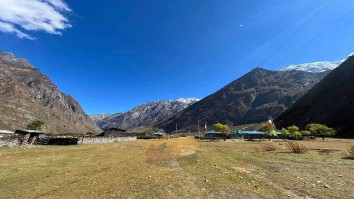
The Tsum Valley trek follows the Budhi Gandaki river north from Machha Khola, splits off the main Manaslu Circuit trail at Lokpa, and climbs into the restricted Tsumba villages of Chumling, Chhekampar and Nile before ending at Mu Gompa (3,700m), a working monastery a few hours' walk from the Tibetan border. There's no Larkya La–style pass to cross and no single day above 4,000m, which is why the route sits well below the Manaslu Circuit on difficulty — we cover that comparison in detail in Manaslu Circuit Trek Difficulty: How Hard Is It Really?
What Tsum Valley trades in altitude, it makes up in isolation. The valley was closed to outsiders until 2008, and villages like Chhekampar still run on Tibetan Buddhist calendars rather than Nepali ones. It's a walking trek through a place that has changed remarkably little, not a summit push.
The Permits: What's Fixed, Regardless of Which Agency You Book With
Three permits are legally required to trek Tsum Valley, and their prices are set by the Nepal government — not by us or any other operator — so they don't change no matter who you book with.
| Permit | Cost (2026) | Notes |
|---|---|---|
| Tsum Valley Restricted Area Permit (RAP) | $40/person for the first 7 days (Sep–Nov), $30/person for the first 7 days (Dec–Aug), plus $7/person per additional day | Issued only through a registered Nepali trekking agency via the Department of Immigration — you cannot apply for this yourself |
| Manaslu Conservation Area Permit (MCAP) | NPR 3,000/person (~$22) for most nationalities; NPR 1,000 for SAARC nationals | One-time entry fee, not charged per day |
| Chumnubri Rural Municipality Permit | NPR 1,000/person (~$7) | Collected on the trail, usually at Lokpa or Jagat — this one gets left off a surprising number of agency websites |
Here's the fixed cost in practice. A standard itinerary spends around 10 days inside the restricted zone. In autumn (peak season), that's $40 for the first week plus $7/day for 3 extra days — $61 for the RAP — plus roughly $22 for the MCAP and $7 for the municipality fee. Total: about $90 per person. Trek in winter, spring or summer and the RAP drops to $30 plus $7/day, bringing the floor closer to $80. This number is identical whether you're looking at a $700 quote or a $2,200 quote — it's the one part of the price nobody can discount.
One rule changed recently and matters here: as of March 22, 2026, Nepal removed the long-standing requirement that restricted-area permits be issued to a minimum of two trekkers. A solo traveller can now get a Tsum Valley RAP in their own name. What hasn't changed is that you still can't apply for it yourself — a registered agency and a licensed guide remain mandatory, so "solo" means solo client, not independent trekking.
What Actually Varies — And Why Quotes Swing by $1,000+
Everything beyond the three permits above is a service, not a government fee, and services differ enormously between operators. This is where a $700 quote and a $2,200 quote for the "same" trek stop being comparable.
| Line item | Typical range (per person, per trip) | What drives the range |
|---|---|---|
| Licensed guide | Built into package; independently, $25–35/day | Experience, group size, English fluency |
| Porter | $20–25/day (usually shared between 2 trekkers) | Load limits, whether it's included or optional |
| Teahouse lodging & meals | $25–40/day | Private vs. shared rooms, meal variety at altitude |
| Kathmandu–Machha Khola transport | $0 (local bus, shared) to $200+ (private jeep, one-way) | Bus vs. jeep, shared vs. private |
| Kathmandu hotel nights | $10–150/night | Budget guesthouse vs. 3–5★ hotel |
| Travel insurance with helicopter evacuation | $50–150 | Coverage altitude and evacuation limit |
A quote at the low end of the market usually means one of a few things got cut: a higher guide-to-trekker ratio than is safe for a restricted trail, no verified evacuation insurance arranged on your behalf, a porter carrying more than the recommended load, or shared rooms and thin meals sold as "full board." None of that shows up until you're in Chhekampar with no phone signal and a problem.
What a Properly Run Tsum Valley Package Should Include
Includes:
- All three permits (RAP, MCAP, Chumnubri municipality fee), arranged in advance
- Government-licensed guide for the full trek
- Porter (or a clear porter-optional price if you're carrying your own bag)
- Teahouse accommodation and three meals a day on the trail
- Ground transport between Kathmandu and the trailhead
- Basic medical kit and pulse oximeter carried by your guide
Excludes (budget for these separately):
- Kathmandu hotel nights before and after the trek
- Nepal tourist visa and international flights
- Personal travel insurance with emergency helicopter evacuation
- Hot showers, Wi-Fi and device charging at teahouses (NPR 200–500 each, per use, above roughly 2,500m)
- Alcoholic drinks, bottled water, and snacks bought on the trail
- Tips for your guide and porter
Combining With the Manaslu Circuit: A Different Cost Floor
If you're adding Tsum Valley onto the full Manaslu Tsum Valley Trek rather than trekking it standalone, the fixed permit floor rises — you now need the Manaslu RAP as well as the Tsum RAP, plus an ACAP for the stretch after Dharapani.
| Standalone Tsum Valley (~10 days in zone) | Manaslu Circuit + Tsum Valley (~18–20 days total) | |
|---|---|---|
| Restricted area permits | Tsum RAP only: ~$61 (peak) | Manaslu RAP (~$100–130) + Tsum RAP (~$61) |
| Conservation permits | MCAP: ~$22 | MCAP + ACAP: ~$44 |
| Municipality fee | ~$7 | ~$7 |
| Fixed government total | ~$90/person | ~$250–300/person |
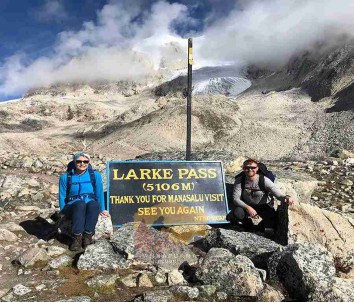
The combined route also means a Larkya La Pass crossing at 5,106m, which pushes the difficulty rating up considerably from the standalone Tsum trek. If you're weighing the two, our Tsum Valley Trekking page has the standalone itinerary and the Manaslu Tsum Valley page above has the combined one — worth reading both before you commit to a duration.
Best Season and Difficulty, in Brief
Spring (March–May) and autumn (September–November) are the most reliable seasons, with clear views and stable trails. Tsum Valley sits partly in a rain shadow behind the Manaslu massif, though, which makes it one of the more workable restricted treks during the summer monsoon compared to routes further south. The trail itself is graded moderate — steady walking days, no technical terrain, and a top altitude of 3,700m at Mu Gompa, well short of what triggers serious AMS risk for most trekkers. If you want the fuller altitude and pass-crossing challenge, the Manaslu Circuit extension is where that comes in.
For a full breakdown of Nepal's permit system region by region, our Ultimate Guide to Trekking Permits in Nepal covers Everest, Annapurna, Langtang and the other restricted areas alongside Manaslu and Tsum.
FAQ
How much does the Tsum Valley trek cost in total? A standard 10–14 day guided Tsum Valley trek typically runs $850–1,900 per person with a reputable agency, depending on group size, season and service level. Within that, roughly $80–90 per person is fixed government permit cost that doesn't change between operators.
What permits do I need for the Tsum Valley trek, and what do they cost? You need the Tsum Valley Restricted Area Permit ($30–40 for the first week plus $7/day after), the Manaslu Conservation Area Permit (NPR 3,000, about $22), and the Chumnubri Rural Municipality Permit (NPR 1,000, about $7).
Can I trek Tsum Valley solo now that the two-person rule is gone? Yes. Since March 22, 2026, Nepal no longer requires a minimum of two trekkers to issue a restricted area permit, so a solo traveller can get a Tsum Valley RAP individually. You still need to book through a registered agency with a licensed guide — independent trekking without an agency remains prohibited in restricted areas.
Is the Tsum Valley trek cheaper than the Manaslu Circuit? Yes, on both the fixed and variable side. The Tsum RAP costs less than the Manaslu RAP, you don't need an ACAP unless you continue onto the Manaslu Circuit, and the shorter, lower-altitude route generally needs fewer trekking days.
Does combining Tsum Valley with the Manaslu Circuit cost much more? Yes. The fixed permit floor roughly triples, from about $90 per person standalone to $250–300 per person combined, because you're paying for the Manaslu RAP and an ACAP on top of the Tsum Valley permits.
What's not included in most Tsum Valley trek packages? Kathmandu hotel nights, your Nepal visa and flights, personal travel insurance with helicopter evacuation coverage, hot showers and device charging on the trail, and tips for your guide and porter are standard exclusions worth budgeting separately.
Ready to see what a Tsum Valley trek actually costs for your dates and group size? Our Tsum Valley Trekking page has the full itinerary, or reach out directly for a quote on the combined Manaslu and Tsum Valley route.