
Most people planning a Bhutan tour from Nepal start with the wrong question. They ask "how much does it cost," expecting one number, and get quoted three different figures by three different websites — $1,500, $3,000, $5,000 — with no explanation of why. The honest answer is that Bhutan's pricing has two completely separate layers: a fixed government fee that's the same for everyone, and a package cost that varies by hotel category and group size. Once you understand which is which, the confusion mostly disappears.
Hand-picked itineraries
Recommended Trips
Related journeys you may want to explore after reading this article.
Why Nepal Is the Easiest Gateway to Bhutan
Bhutan doesn't have direct flights from most of the world. The country is served by exactly two airlines — Drukair (Royal Bhutan Airlines) and Bhutan Airlines — flying into Paro, one of the more demanding airports on earth to land at, tucked into a valley with mountains on both sides. Kathmandu is one of a handful of cities with a direct connection, alongside Delhi, Kolkata, Bangkok, Singapore, and Dhaka.
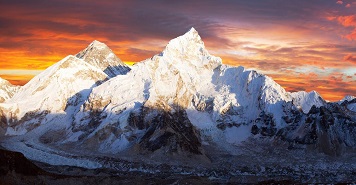
For travelers already in Nepal — finishing an Everest Base Camp trek or an Annapurna itinerary and looking to add a second country — that direct Kathmandu–Paro sector (roughly an hour, with clear-weather views of the Himalayan range along the way) makes Bhutan a genuinely easy add-on rather than a separate trip requiring its own international flights.
The Two Numbers You Actually Need
1. The Sustainable Development Fee (SDF) — fixed, government-set
Every international visitor to Bhutan (with the exception of Indian nationals, who pay a reduced SAARC rate) pays a Sustainable Development Fee of USD 100 per person, per night. This isn't a hotel charge or a service fee — it's a flat levy the Bhutanese government collects to fund conservation, free education, and free healthcare, and it's separate from anything your tour operator charges you. The reduced $100 rate (down from an original $200) is confirmed in effect through 31 August 2027.
On top of the SDF, there's a one-time, non-refundable visa fee of USD 40 per person. Children under 6 are exempt from the SDF entirely; children aged 6–12 pay half.
Here's what that means in practice for a 7-night Bhutan itinerary:
| Item | Cost per person |
|---|---|
| SDF (7 nights × $100) | $700 |
| Visa fee (one-time) | $40 |
| Government total | $740 |
That $740 is fixed regardless of which operator you book with or what hotel category you choose. It is the floor, not the ceiling.
2. The package cost — variable, operator-set
This covers hotels, meals, your guide, ground transport within Bhutan, and internal permits. Since Bhutan moved away from its old all-inclusive "minimum daily package" system in 2022, this cost is now genuinely negotiable and depends on:
- Hotel category. Bhutan requires all tourist accommodation to be certified "clean & safe" by the government, but there's a real range within that — from simple 3-star lodges to five-star luxury properties like Aman or Six Senses, which run substantially higher.
- Group size. Solo travelers pay the most per night for guide and vehicle costs; a group of 3 or more brings the per-person rate down noticeably, since those costs are shared.
- Season. Spring (March–May) and autumn (September–November) command premium rates because that's when Bhutan's dzongs, valleys, and mountain views are at their best — the same seasonal logic that governs Nepal trekking.
We work through a partner Bhutanese operator to arrange the on-ground itinerary, since Bhutan requires every tourist visa to be sponsored by a Bhutan-licensed operator — no independent travel or self-arranged visas are possible, full stop. If you want an exact package quote for your dates and group size, that's a conversation worth having directly rather than trusting a generic number online — send us your dates and headcount through our contact page and we'll get you real figures, not estimates.
What a Bhutan Tour from Nepal Actually Looks Like
The itineraries we run most often follow a similar shape: fly Kathmandu to Paro, spend a day or two around Paro and Thimphu (the capital — reportedly still the only capital city in the world without a traffic light), then push further into central Bhutan toward Bumthang for valley scenery and a shorter cultural trek, before looping back to Paro for the flight home.
The one stop that appears on almost every itinerary, regardless of length, is Taktsang Monastery — the Tiger's Nest — a monastery built into a cliff face above Paro valley, reached by a walk of two to three hours uphill. It's not technically difficult, but it's a real hike, not a scenic drive-up, and anyone arriving straight off a long-haul flight should build in a rest day first rather than attempting it on arrival.
Our own Bumthang Cultural Tour & Trek runs 14 days and combines the Paro–Thimphu cultural circuit with several days of short trekking in central Bhutan's Tang and Chumey valleys — a good option if you want more than a highlights tour but aren't ready for a multi-week Himalayan trek. For travelers who want Bhutan bolted onto a Nepal trip without a second dedicated journey, our Nepal and Bhutan tour package handles both legs as one itinerary.
Best Season for a Bhutan Tour from Nepal
| Season | Months | What to expect |
|---|---|---|
| Spring | March–May | Rhododendrons in bloom, clear mountain views, peak pricing |
| Summer/Monsoon | June–August | Lush green valleys, frequent rain, fewer crowds, some road delays |
| Autumn | September–November | Clearest skies of the year, major festivals (tshechus), peak pricing |
| Winter | December–February | Cold but dry, crystal-clear Himalayan views from Paro and Thimphu, quietest season |
If your priority is photography and mountain visibility, autumn is hard to beat — but it's also when every hotel in Paro and Thimphu is at its busiest and most expensive. Winter is genuinely underrated: Paro valley in January under clear skies, with almost no other tourists around, is a different experience entirely from the same view in October.
Visa Process: What Actually Happens
- You send your passport details and travel dates to your operator.
- The operator (through their Bhutan-licensed partner) submits your application to the Tourism Council of Bhutan online system.
- You pay the SDF and visa fee in advance — this is non-negotiable; Bhutan does not issue visas on credit or on arrival for leisure tourists.
- Approval typically takes 5–7 working days, and you receive a visa clearance letter by email.
- The physical visa stamp is issued on arrival at Paro airport.
There is no way to shortcut this by applying independently — Bhutan's system is built specifically so that every tourist arrives already sponsored by a licensed operator. Budget the 5–7 day processing window into your planning; don't finalize flights until your clearance letter is confirmed.
FAQ
Do I need a visa to visit Bhutan from Nepal? Yes. Almost all nationalities require a pre-approved visa arranged through a Bhutan-licensed tour operator, with the exception of Indian, Bangladeshi, and Maldivian nationals, who have separate simplified entry rules. There is no visa-on-arrival for standard leisure travel.
How much does a Bhutan tour from Nepal cost in total? The government-mandated portion (SDF plus visa fee) comes to $740 for a 7-night trip. The full cost including hotels, meals, guide, and transport depends on your hotel category and group size, and can range from roughly $1,800 to well over $5,000 per person for the same duration depending on those choices.
Can I fly directly from Kathmandu to Bhutan? Yes. Drukair and Bhutan Airlines both operate direct Kathmandu–Paro flights, taking approximately one hour, with mountain views along much of the route on clear days.
Is the Sustainable Development Fee refundable if I cancel? Yes, unused-night SDF is refundable through the official visa portal if you shorten or cancel your trip before it begins. The $40 visa fee itself is not refunded.
What is the best time of year for a Bhutan tour from Nepal? Spring (March–May) and autumn (September–November) offer the clearest skies and best mountain visibility, and also coincide with Bhutan's major tshechu festivals. Winter is colder but significantly quieter and still offers clear Himalayan views from Paro and Thimphu.
Can I combine a Nepal trek with a Bhutan tour in one trip? Yes — this is one of the more common requests we get, particularly from travelers finishing an Everest or Annapurna trek who want a lower-altitude, culture-focused second leg. Our Nepal and Bhutan combined package is built for exactly this.
Do children pay the full Sustainable Development Fee? No. Children under 5 are exempt entirely, and children aged 6–12 pay half the adult SDF rate.
Is Bhutan more expensive than trekking in Nepal? Per day, yes, by a wide margin — the $100 nightly SDF alone exceeds what a full day of teahouse trekking in Nepal typically costs. Bhutan's tourism model is deliberately built around fewer visitors paying more, rather than high-volume budget travel.
Schema Recommendations
- FAQPage schema for the FAQ section above (8 Q&A pairs)
- BreadcrumbList schema: Home > Travel Guide > Bhutan Tour from Nepal: Visa, Cost & How to Plan It
Ready to Plan Your Bhutan Tour?
Whether you're adding Bhutan onto a Nepal trek or planning it as a standalone trip, get in touch with Annapurna Encounter for a real quote based on your dates, group size, and hotel preference — not a generic number pulled from a search result.