
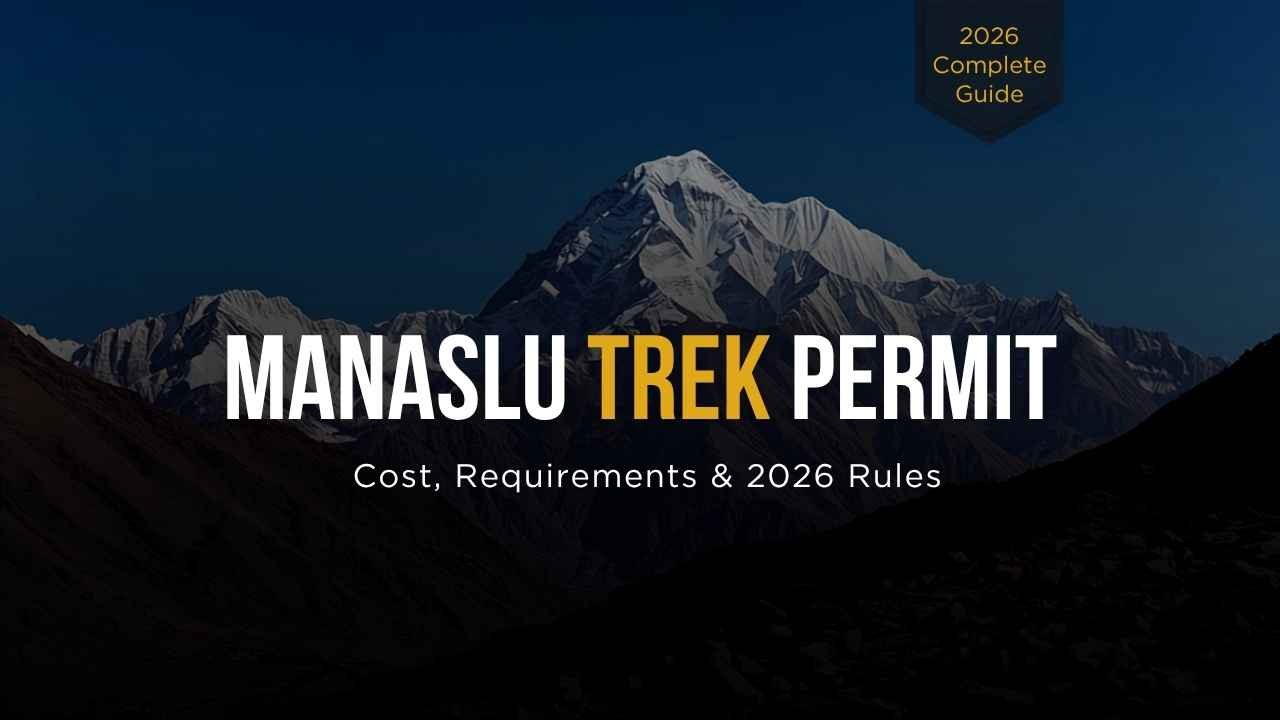
The Manaslu trek permit isn't just bureaucracy—it's a gateway requirement that protects both trekkers and the remote communities along the route. Here's the reality: Manaslu remains one of Nepal's most restricted trekking regions. The 8,163m peak sits in a sensitive border zone with Tibet, and to enter the Manaslu circuit trek area, you legally must hold valid permits issued by Nepal's Department of Immigration and Nepal Tourism Board.
Hand-picked itineraries
Recommended Trips
Related journeys you may want to explore after reading this article.
.jpg)
.jpg)
.jpg)
.jpg)
Unlike the Annapurna Circuit Trek or Everest Base Camp Trek, you cannot simply show up and trek independently. Manaslu demands advance planning—typically 7–14 days before departure—which is why many trekkers miss this critical step in their preparations.
At Annapurna Encounter, we've organized 150+ Manaslu trek expeditions since 2014, and we've seen how permit confusion can derail otherwise perfect treks. This guide covers everything: permit types, exact costs, the application process, and how to avoid costly delays.
What Is the Manaslu Permit & Do You Really Need It?
The Simple Answer: Yes, Absolutely
Trekking the Manaslu Circuit actually requires three separate permits, not one: the Restricted Area Permit (RAP), the Manaslu Conservation Area Permit (MCAP), and the Annapurna Conservation Area Permit (ACAP) — the last because the route exits into Annapurna territory near Dharapani. All three are issued by Nepali government bodies (the RAP through the Department of Immigration, MCAP and ACAP through the Nepal Tourism Board).
Key fact: You cannot legally trek the Manaslu circuit without these permits. Attempting to bypass them risks fines, being turned back at the entry checkpoint in Jagat, or your guide's license being put at risk.
Who Actually Needs the Permit?
- ✅ Foreign nationals (non-Nepali citizens) — absolutely required
- ✅ Indian and other SAARC nationals — required, but at reduced rates
- ✅ All trekkers planning the Manaslu circuit — from Jagat to Dharapani
- ✗ Nepali citizens — do not need the RAP, but pay a minimal MCAP fee
Rule change you need to know about (March 2026): Until recently, Manaslu's restricted-area permits could only be issued to groups of two or more. As of March 2026, Nepal's Department of Immigration removed that minimum-group requirement across all restricted districts, including Manaslu and Tsum Valley. Solo trekkers can now obtain the RAP individually. What hasn't changed: every trekker, solo or in a group, must still travel with a licensed guide from a registered trekking agency. Independent, guideless trekking remains prohibited in the Manaslu restricted area.
How Much Does the Manaslu Trek Permit Cost?
2026 Official Permit Fees (USD Only)
This is where most trekkers get confused: Manaslu doesn't have one flat permit fee. You need three permits, and the main one is priced by season and number of days, not by a single flat rate.
1. Restricted Area Permit (RAP) — Priced by Season & Duration
| Season | First 7 Days | Each Additional Day |
|---|---|---|
| Peak season (September–November) | $100 per person | $15 per person, per day |
| Rest of year (December–August) | $75 per person | $10 per person, per day |
The RAP is calculated only for the days you actually spend inside the restricted zone — roughly from Jagat to Dharapani. Days spent in Kathmandu, in transit to the trailhead, or trekking beyond Dharapani into the Annapurna Conservation Area don't count toward this total.
2. Manaslu Conservation Area Permit (MCAP) — One-Time Fee, Same Year-Round
| Nationality | Cost |
|---|---|
| Non-SAARC foreigners | Approximately $30 per person |
| SAARC nationals (India, Bangladesh, Sri Lanka, etc.) | Approximately $8 per person |
| Nepali citizens | Minimal domestic rate |
Unlike the RAP, this is a single entry fee covering your whole trip — no daily surcharge.
3. Annapurna Conservation Area Permit (ACAP) — Same Rate as MCAP
Because the Manaslu Circuit exits into the Annapurna Conservation Area near Dharapani, you also need an ACAP.
| Nationality | Cost |
|---|---|
| Non-SAARC foreigners | Approximately $30 per person |
| SAARC nationals | Approximately $8 per person |
Plus: A Small Local Development Fee
A modest Chumnubri Rural Municipality development fee (roughly $8 for foreigners) is collected at Jagat, at the entrance to the restricted zone.
Note: No TIMS card is required for the Manaslu region — a common point of confusion since it's required on other Nepal treks.
Total Estimated Permit Cost (Standard 14-Day Circuit)
Most trekkers spend 9–11 days inside the restricted zone on a standard 14-day Manaslu Circuit itinerary. Adding up RAP + MCAP + ACAP + the municipality fee:
| Season | Estimated Total (Non-SAARC Foreigner) |
|---|---|
| Peak season (Sept–Nov) | Approximately $215–$260 per person |
| Rest of year (Dec–Aug) | Approximately $180–$220 per person |
Example: Solo trekker in autumn, 10 days inside the restricted zone
- RAP: $100 (first 7 days) + $45 (3 extra days × $15) = $145
- MCAP: ~$30
- ACAP: ~$30
- Municipality fee: ~$8
- Total: ~$213
All permit fees are set by the Nepal government and can change without notice. We reconfirm exact figures with the Department of Immigration and Nepal Tourism Board before every departure.
How to Get Your Manaslu Trek Permit
Why You Can't DIY the Restricted Area Permit (Unlike Other Nepal Treks)
Here's something that surprises a lot of trekkers: unlike the TIMS card or ACAP on other routes, the Manaslu Restricted Area Permit cannot be self-processed by an independent trekker. By law, the RAP must be applied for through a government-registered trekking agency on your behalf. There is no walk-in or online option for individuals.
The MCAP and ACAP, by contrast, can technically be obtained in person at the Nepal Tourism Board office in Kathmandu or Pokhara without an agency. But since you need a licensed guide regardless (mandatory for the restricted area) and the RAP has to go through an agency anyway, almost everyone lets their trekking operator handle all three permits together.
The Process When You Book With a Trek Operator
- Share your details — passport number, nationality, and travel dates
- Your operator prepares the application — including your itinerary, guide's insurance details, and passport copies, which the Department of Immigration requires
- Submission to the Department of Immigration (for the RAP) and Nepal Tourism Board (for MCAP and ACAP)
- Processing time: Typically a few working days, though we recommend finalizing your booking at least 1–2 weeks before departure to allow buffer time
- Permit collection: Your guide carries the original permits and presents them at checkpoints throughout the trek
Why this matters:
- Permits are non-refundable, non-transferable, and valid for a single entry only — tied to the specific dates and route in your application
- Government offices are closed on public holidays, which can add delays if your paperwork is submitted late
- Errors in passport details or itinerary dates are the most common cause of processing delays
Real talk: Because the restricted area permit legally requires a registered agency, there's no cheaper "independent" route to compare against. The real decision isn't DIY vs. operator — it's choosing an operator with a track record of clean, fast permit processing.
Real talk: DIY is cheaper but riskier. We've seen permits rejected due to photo size, missing visa information, or incomplete forms. If your trek is non-negotiable, hiring an operator (even for just the permit) is insurance.
Required Documents & Information
Before applying, gather these items:
Must-Haves
- Valid passport (minimum 6 months validity after trek end date)
- Passport photocopy (bio page + visa pages)
- Visa confirmation (if arriving on tourist visa, bring confirmation)
- Passport-size photo (recent, white background)
- Trek itinerary (dates and route, submitted by your agency)
Information to Provide
- Full name (exactly as in passport)
- Date of birth
- Nationality
- Passport number
- Arrival date in Nepal
- Exact trek start and end dates
- Trek duration (14–18 days typically for the full circuit)
- Emergency contact (home country phone/email)
Pro Tips
- Visa timing: Get your Nepal visa BEFORE your agency submits the permit application. Officials want to see your visa stamp.
- Photo requirements: Make sure your photo is clear, recent, and meets standard passport-photo specifications.
- Passport validity: If your passport expires within 6 months of your trek, renew it first. Permits won't be issued otherwise.
- Book early: Since the RAP must go through an agency and is tied to fixed dates, confirm your booking and dates as early as possible — especially for autumn departures.
How Long Is the Permit Valid?
Validity Is Tied to Your Trek Dates, Not a Generic Window
Unlike some permits that give you a flexible 30-day window, the Manaslu Restricted Area Permit is issued for the specific dates and route submitted in your application. It's a single-entry document — non-refundable, non-transferable, and matched exactly to the itinerary your agency filed with the Department of Immigration.
This means:
- Your permit is valid for the exact days you're scheduled to be inside the restricted zone
- It cannot be reused for a different date range or route without reapplying
- There's no "buy it now, use it whenever" flexibility like some conservation permits offer
What If Your Trek Dates Change?
- Minor change (1–2 days, due to weather or acclimatization): Usually manageable — your guide can coordinate with checkpoint officials, since delays from weather are common and understood
- Major date change (before departure): Your agency will need to resubmit the application with updated dates before the trek starts
- Trek postponed to a new season: A new application is required, and since RAP pricing is seasonal, your cost may change (e.g., moving from off-season into autumn increases the daily rate)
Insider note: Because permits are agency-submitted and date-specific, confirm your exact trek dates with your operator before the application goes in. Changing dates after submission means resubmission, not a simple amendment.
Restricted Area Permit Checkpoints & Enforcement
Once you have your permits, where will they actually be checked? Here's where you'll encounter checkpoints along the actual Manaslu Circuit route:
Mandatory Checkpoints
- Jagat (entrance to the restricted zone)
- Main RAP check-in point; permits are verified here before you're allowed to continue north
- This is where the restricted area officially begins
- Deng
- Secondary checkpoint along the route
- Permits and passport details verified
- Namrung
- Checkpoint before the higher, more remote sections of the trek
- Guide registration and permit checks
- Samagaon
- Major checkpoint in the high-altitude section, near the Manaslu Base Camp turnoff
- Officers verify every trekker's details closely here
- Samdo
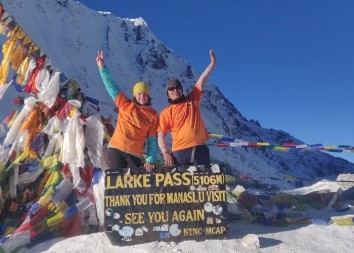
- Final checkpoint before Larke La Pass
- Confirms you're cleared to cross into the remote pass section
- Dharapani (exit point)
- Where the restricted zone ends and the route connects into the Annapurna Conservation Area
- ACAP is checked here if continuing toward Besisahar or exiting the region
What Officers Check
- Your permit documents (RAP, MCAP, ACAP — carried by your guide)
- Your passport
- Trek dates (confirming you're within your permitted itinerary window)
- Guide credentials and agency registration
What happens if you don't have a permit?
- You will be turned back at Jagat and denied entry to the restricted zone
- Your guide's license and your trekking agency's registration are put at serious risk
- This is precisely why the permit system requires a registered agency in the first place — enforcement is taken seriously along this route
Manaslu Permit vs. Annapurna Permit: What's the Difference?
Since we also organize Annapurna treks, here's how permits compare:
| Factor | Manaslu Permits | Annapurna Permit (ABC/AC) |
|---|---|---|
| Required? | Yes, mandatory (RAP + MCAP + ACAP) | ABC/AC: Yes (ACAP entry fee, no restricted-area permit) |
| Cost (Non-SAARC) | ~$180–$260 total, depending on season and days | ACAP fee only, roughly $30 |
| Who can issue it | RAP only through a registered agency | Can be arranged by an agency or obtained directly |
| Processing time | A few working days via agency; book ahead | Fast; often same-day |
| Restricted area? | Yes (sensitive border zone) | No (open trekking zone) |
| Group requirement | Solo trekkers allowed since March 2026 | No group requirement |
| Guide requirement | Mandatory, licensed guide required | Recommended, not legally mandatory |
| Difficulty to obtain | Moderate (agency-dependent) | Easy |
Bottom line: Manaslu is more tightly regulated and costs more in permits than Annapurna, largely because it's a restricted border area requiring a registered agency. For comparison, the Annapurna Circuit Trek and Annapurna Base Camp Trek have simpler, lower-cost permit requirements.
Best Seasons to Trek Manaslu & Permit Considerations
The permit doesn't expire by season, but certain seasons affect trekking feasibility:
Spring (March–May)
- Permit status: Easily obtainable
- Trekking condition: Excellent (clear skies, stable weather)
- Trek dates easy to confirm? Yes
- Recommendation: Book permit early (mid-February) if trekking late April
Summer/Monsoon (June–August)
- Permit status: Still easily obtainable
- Trekking condition: Challenging (daily rain, fog, mudslides)
- Trek dates easy to confirm? Yes (rains are predictable)
- Recommendation: Manaslu treks rare in monsoon; consider post-monsoon instead. Alternatively, the Langtang Valley Trek is more stable during monsoon
Autumn (September–October)
- Permit status: High demand, book early
- Trekking condition: Perfect (clearest views, most stable)
- Trek dates easy to confirm? Yes
- Recommendation: Best season overall; permit applications peak here
Winter (November–February)
- Permit status: Easily obtainable (low demand)
- Trekking condition: Cold, high snowfall at passes, but spectacular
- Trek dates easy to confirm? Yes, but weather delays possible
- Recommendation: Only for experienced mountaineers with cold-weather gear
Permit strategy: If trekking in autumn (Sept–Oct), apply 3–4 weeks in advance. Spring is flexible; 10–14 days is sufficient.
FAQ: Manaslu Trek Permit Questions Answered
Q: Can I get a Manaslu permit as a solo trekker? A: Yes — as of March 2026, you can. Nepal's Department of Immigration removed the long-standing rule that required a minimum of two trekkers to obtain a restricted-area permit. Solo trekkers can now apply for the Manaslu RAP individually. The one thing that hasn't changed: you still need a licensed guide from a registered agency. Fully independent, guideless trekking remains prohibited in restricted areas.
Q: Do I really need a guide to trek Manaslu, or just a permit? A: Legally, only a permit is required. Practically, guides are essential—the route is remote, weather is unpredictable, teahouses are sparse, and you'll need high-altitude navigation skills. Every major trek operator requires guides (insurance liability). Solo trekking without a guide is technically possible but extremely risky and not recommended. We mandate guides for all groups. If you want to trek solo without a guide, consider easier alternatives like the Annapurna Circuit Trek or Langtang Valley Trek.
Q: What if my permit application gets rejected? A: It's uncommon since your agency handles the paperwork, but issues can arise from passport discrepancies or incomplete itinerary details. If there's a problem, the Department of Immigration will flag it before issuance, and your agency corrects and resubmits. This is one advantage of going through an experienced operator — we catch issues before they cause delays.
Q: Can I trek Manaslu with a tourist visa, or do I need a special visa? A: A standard tourist visa is fine. Nepal's regular tourist visas (issued on arrival or in advance) are sufficient for Manaslu trekking. No special mountaineering visa is needed unless you're climbing Manaslu itself, which requires separate expedition permits. Just make sure your visa remains valid for your entire trek duration.
Q: If I trek the Manaslu circuit and connect to the Annapurna circuit, do I need permits for both? A: You need the Manaslu RAP and MCAP for the restricted section, plus the ACAP once you cross into Annapurna Conservation Area territory near Dharapani. Your agency arranges all of these together as part of the same application, so there's no separate process to manage — but note it is three permits, not one, working together to cover the full route.
Q: What happens if my trek runs longer than planned? A: Since the RAP is priced per day beyond the first week, an extended trek (due to weather delays, altitude acclimatization, or itinerary changes) may mean an additional daily fee. Your guide coordinates with checkpoint officials if delays are weather-related, which is common and generally well understood. Build a buffer of a day or two into your itinerary when booking to avoid last-minute complications.
Q: Can I extend my permit if my trek takes longer than expected? A: If you're delayed by weather, altitude sickness, or injury, your guide should inform the nearest checkpoint and your agency, who can coordinate an extension or adjustment. This isn't unusual on high-altitude routes — Larke La Pass crossings are sometimes affected by weather. Extensions are handled case by case rather than automatically.
Q: Do I need a separate permit for the Tsum Valley extension (if trekking Manaslu + Tsum)? A: Yes — Tsum Valley is technically its own restricted area with its own RAP, separate from the main Manaslu RAP, even though it's often combined into one trip. The Tsum Valley trek permit is priced similarly by season: roughly $35 for the first week December–August, or around $40 for the first week September–November, plus a per-day rate after that. Your agency applies for both permits together if you're combining the routes.
Q: What if I lose my permit during the trek? A: This is rare since your guide carries and safeguards the original permit documents, but if it happens, contact your agency immediately. Since the permits are tied to your registered application with the Department of Immigration, your agency can coordinate with checkpoint officials to verify your details on record.
Q: Are permit fees refundable if my trek is canceled? A: No. Once issued, permit fees are non-refundable and non-transferable — this is standard Nepal government policy across all restricted and conservation area permits. If you need to cancel or postpone, discuss timing with your operator before the application is submitted.
How Annapurna Encounter Handles Manaslu Permits
Since 2014, we've processed Manaslu trek permits for 150+ trekkers. Here's how we streamline the process for you:
Our Process
- Intake: You provide passport details and trek dates (via booking form or WhatsApp)
- Application: We prepare and submit your RAP application to the Department of Immigration, and MCAP/ACAP applications to the Nepal Tourism Board
- Tracking: We monitor approval status and confirm all three permits are in order well before departure
- Delivery: Your guide carries the original permit documents and presents them at each checkpoint
- Redundancy: We keep copies on file at our office in case of any on-trail issues
What's Included in Our Trek Packages
- ✅ All three Manaslu permits (RAP, MCAP, ACAP)
- ✅ Experienced guide (licensed, insured)
- ✅ Porter or pack animal (depending on route)
- ✅ Accommodation (teahouse or camping)
- ✅ All meals
- ✅ First aid & emergency evacuation insurance
- ❌ International flights
- ❌ Nepal tourist visa fee (but we guide you through the process)
Why Trek with Us?
- No permit stress: We handle all three permits; you focus on preparation
- Vetted guides: All guides are trained mountaineers with years of Manaslu-specific experience
- Local expertise: We're based in Kathmandu; we track current permit rules and checkpoint protocols
- Emergency support: WhatsApp/phone available 24/7 during your trek
- Solo-friendly: With the March 2026 rule change, we now arrange permits for solo trekkers too — no need to find a trekking partner
- Proven experience: From 14-day Manaslu Circuit treks to combined Manaslu & Annapurna Circuit adventures, we've covered every route
Ready to Trek Manaslu? Here's What's Next
- Confirm your dates — Pick your trek start date (typically March–May or September–October for best conditions)
- Get in touch — Contact us via email (annapurnaregion@gmail.com | info@annapurnaencounter.com) or WhatsApp (+977 9860311119)
- We'll secure your permit — We handle the full application and delivery
- Prepare your gear — Gear up for high-altitude trekking
- Start trekking — Arrive in Kathmandu, meet your guide, and explore the Manaslu region
We've guided 500+ trekkers over 10+ years. Let us make your Manaslu trek unforgettable—permit hassles included in the deal. Compare your options: explore our complete Manaslu trek portfolio, or browse all Nepal trekking regions.
Closing Summary
The Manaslu trek permit system is non-negotiable for foreign trekkers, but it shouldn't be stressful:
- Cost: Roughly $180–$260 total per person for RAP + MCAP + ACAP, depending on season and trek length
- Process: Must go through a registered trekking agency — no independent DIY option for the restricted area permit
- Documents: Passport, photo, visa confirmation, and a confirmed itinerary — your agency handles the filing
- Validity: Tied to your specific trek dates and route (single entry, non-transferable)
- New in 2026: Solo trekkers can now get the permit individually — the two-person minimum was removed in March 2026
- Enforcement: Real (checkpoints at Jagat, Deng, Namrung, Samagaon, and Samdo), but straightforward if your permits are in order
The permit system protects both you and the communities of the Manaslu region. Trek responsibly, trek legally, and trek with a reputable local operator. We're here to make it seamless.
Ready to schedule your Manaslu adventure? Contact Annapurna Encounter today. Browse our 14-day Manaslu Circuit Trek, combined Manaslu & Annapurna Trek, or explore all Manaslu region treks. Your permits—and your unforgettable trek—await.
📞 CONTACT ANNAPURNA ENCOUNTER
📱 WhatsApp/Viber: +977 9841537595
📞 Phone: +977 9860311119 | +977 1 5369748
📧 Email: annapurnaregion@gmail.com | info@annapurnaencounter.com
📍 Office: Thamel, Kathmandu, Nepal
🌐 Website: www.annapurnaencounter.com
Questions about the Manaslu permit? Contact us directly:
📞 Phone: +977 9860311119 | +977 9841537595 | +977 1 5369748
📧 Email: annapurnaregion@gmail.com | info@annapurnaencounter.com
📍 Office: Thamel, Kathmandu, Nepal
🌐 Website: www.annapurnaencounter.com
💬 WhatsApp/Viber: +977 9860311119